

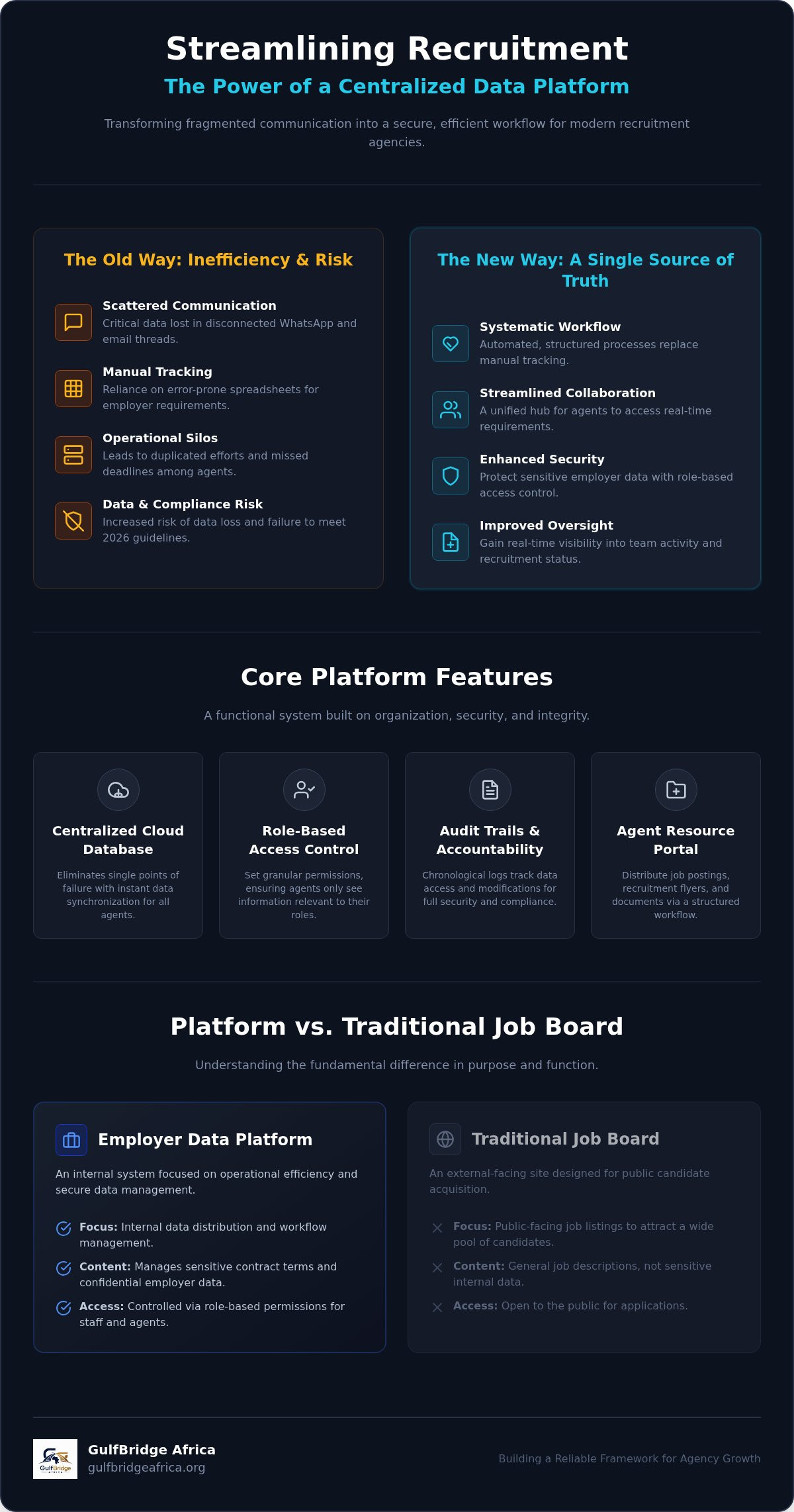
What if your agency's most critical employer requirements were no longer scattered across disconnected WhatsApp threads and email chains? Fragmented communication creates operational silos that slow down recruitment cycles and increase the risk of data loss. Implementing a centralized employer data sharing platform allows your team to move away from manual tracking toward a systematic workflow. This transition is essential as federal guidance in 2026 clarifies that employers remain responsible for protecting data shared with third-party platforms. Using a structured system ensures compliance while maintaining operational speed.
Managing multiple employer demands while coordinating various agents is a complex administrative task. You likely find it difficult to track which agent is working on specific requirements, often leading to duplicated efforts or missed deadlines. This article demonstrates how a centralized system eliminates these inefficiencies by providing a single source of truth for all stakeholders. We will examine how to streamline agent collaboration, improve oversight of team activity, and secure sensitive company information through structured data management. You will learn how to replace fragmented tools with a reliable framework for agency growth.
Key Takeaways
- Transition from manual spreadsheets to a centralized cloud environment to improve data organization and accessibility.
- Eliminate communication silos by consolidating fragmented WhatsApp and email data into a single, verifiable source.
- Implement an employer data sharing platform to manage role-based access and protect sensitive company information.
- Audit existing storage methods and establish clear user permissions for internal staff and external recruitment agents.
- Use an Agent Resource Portal to distribute job postings and recruitment flyers through a structured, collaborative workflow.
What is an Employer Data Sharing Platform for Recruitment?
An employer data sharing platform is a centralized cloud environment built for the systematic storage and distribution of employer requirements. Recruitment agencies use these systems to transition from manual spreadsheets and personal files toward automated, permission-based data hubs. This shift is necessary to handle the increasing volume of data generated during international hiring. The primary function of the platform is to bridge the gap between job vacancies and the agents tasked with finding candidates. By 2026, real-time data access has become a requirement for agencies managing teams across different geographic locations. Centralized access ensures that data flows directly from the employer to the agent without manual intervention. It's a method that prioritizes operational speed over administrative complexity.
The Role of Cloud-Based Centralization
Cloud-based systems eliminate the "single point of failure" commonly found in local hard drives or individual email accounts. If a local device fails or an employee leaves the agency, the employer data remains secure and accessible in the cloud. This accessibility is critical for remote teams operating across various African regions. Centralization ensures that all data updates synchronize instantly. When an agency modifies an employer requirement, every authorized agent sees the latest version immediately. This synchronization prevents agents from working on outdated job specifications. It's a stable environment where task management isn't interrupted by technical failures at the local level. By 2026, 20 US states have implemented comprehensive privacy laws that affect HR data management, making cloud-based compliance tools essential for agencies handling global data.
Distinguishing Data Sharing from Traditional Job Boards
Traditional job boards focus primarily on candidate acquisition and public-facing listings. In contrast, an employer data sharing platform focuses on the operational information required to manage the recruitment process. These platforms function similarly to an Enterprise Wiki by facilitating the internal distribution of specialized knowledge and organizational data. Agencies use these hubs to manage both internal and external data sharing. Managers define exactly what agents can see; this protects sensitive contract terms while providing the necessary job details. These systems handle multiple data types beyond text, including recruitment flyers and official employer documentation. This functional approach prioritizes operational efficiency. It provides a structured framework for teams to organize, track, and share data in one place.
Key Features of a Functional Employer Data Management System
A functional system prioritizes organization and data integrity. An employer data sharing platform must include a centralized database to store employer contact information and specific contract terms. This structure allows team members to locate essential documents without searching through individual email accounts or physical files. Collaborative tools within the system enable staff to track the status of specific vacancies in real-time. This visibility reduces redundant communications and prevents errors in candidate placement. As highlighted by SHRM on People Data, sharing information effectively across an organization drives better decision-making and increases overall productivity. Integrated digital tools, such as recruitment flyers, allow for immediate campaign launches once a vacancy is posted.
Data Access Control and Permissions
Agencies must protect sensitive employer information from unauthorized viewing. A robust employer data sharing platform utilizes role-based access control to manage visibility. Administrators set granular permissions based on the staff member's role or the external agent's requirements. This approach maintains operational transparency while ensuring employer privacy. Audit trails provide a chronological record of who accessed or modified specific records. This feature is critical for maintaining data security and accountability within the recruitment workflow. It allows managers to verify that sensitive data is only handled by authorized personnel. Agencies can manage these workflows efficiently using an employer data management platform designed for regional collaboration.
Resource Management and Agent Portals
Agent resource portals facilitate the distribution of necessary recruitment assets to external partners. These portals provide agents with standardized materials such as job descriptions and recruitment flyers. Providing these assets directly through the platform ensures that all field agents use the most recent information. This process streamlines the flow of data from the agency headquarters to the field. Centralizing agent documentation within the portal also improves compliance and oversight. It creates a systematic environment where all recruitment activities are documented and verifiable. By using a portal, agencies eliminate the need for manual file transfers. This results in a more efficient and reliable recruitment cycle.
Overcoming Data Silos in African Manpower Management
Fragmented communication creates the "WhatsApp Silo." This occurs when recruiters share job requirements through personal messaging apps rather than a structured system. Information becomes trapped in individual chat histories. This fragmentation leads to lost placements because agents can't access historical data or verify current requirements. Relying on recruiter memory or personal files creates significant operational risks. If a recruiter is unavailable, the agency loses access to that specific employer's data. This lack of continuity disrupts the entire recruitment cycle.
Cross-border recruitment in Africa increases this complexity. Managing data across multiple jurisdictions requires a unified approach to maintain compliance and speed. For instance, GulfBridge Africa successfully navigates diverse African regulatory frameworks and data protection laws. Maintaining such compliance across different regions is impossible without a centralized employer data sharing platform. The financial impact of slow data sharing is direct. Delays in distributing job requirements result in slower hiring cycles. This reduces agency revenue and lowers client satisfaction. It turns a professional service into an unpredictable manual process.
Standardizing Data Across Regional Teams
Branch offices often use different formats for recording employer requirements. This inconsistency forces staff to spend time on "data cleaning" before sharing information with agents. Standardizing data formats ensures that every requirement is clear and actionable. A declarative, utilitarian interface supports high-speed operations by presenting data in a predictable layout. This structure allows regional teams to process vacancies without manual reformatting. It ensures that an agent in one region receives the same quality of data as an agent in another. Consistency in data entry leads to consistency in recruitment outcomes.
Improving Agency-Employer Transparency
Systematic record-keeping builds trust with employers. Agencies use shared data to provide real-time updates on vacancy status. This transparency positions the agency as a technology-enabled partner rather than a traditional manual service. Data-driven reporting allows for precise oversight of recruitment activity. Employers value the ability to see progress through a structured platform. This methodical approach to data management strengthens the professional relationship between the agency and the employer. It moves the partnership away from informal updates toward a verified, systematic workflow. Agencies that adopt these systems demonstrate a commitment to operational efficiency and data integrity.
Steps to Implement a Data Sharing Platform in Your Agency
Implementation begins with a systematic audit of your current data storage methods. You must identify every location where employer information resides, including email folders, local spreadsheets, and messaging app histories. This audit reveals the specific silos that prevent efficient data flow. Once identified, you can define user roles for your internal team and external recruitment agents. Assigning permissions based on these roles ensures that sensitive contract terms remain restricted while operational data remains accessible. Using a structured employer data sharing platform simplifies this administrative transition.
The next step involves migrating existing employer records into a centralized cloud database. This process converts fragmented files into a structured, searchable format. You must standardize your job posting formats during this migration to ensure consistency across the platform. A uniform format allows agents to process requirements faster and reduces errors in candidate matching. Finally, establish a daily workflow for updating vacancy statuses and agent progress. This routine maintains the accuracy of the platform and provides real-time oversight for agency managers. To begin centralizing your agency operations, access our employer data management platform.
Mapping Your Recruitment Workflow
Identify every touchpoint where team members share data. You must determine which information is public for agents and which is private for the agency. This mapping clarifies the path of a vacancy from the initial employer request to the final placement. It allows you to eliminate redundant steps in the communication chain. Moving from manual spreadsheets to cloud-based data mapping ensures that every stakeholder understands their specific responsibilities within the recruitment cycle.
Training Agents on the Resource Portal
Onboard your agents to use the cloud platform for accessing recruitment flyers and job descriptions. Direct portal access reduces the reliance on email attachments and prevents the use of outdated materials. You should set clear expectations for data entry and status updates within the system to maintain data integrity. A structured onboarding process ensures that external partners can utilize the employer data sharing platform effectively from the first day of implementation. This approach creates a predictable environment for agent collaboration and resource distribution.
GulfBridge Africa: A Centralized Hub for Workforce Data
GulfBridge Africa provides the technical infrastructure required for regional data management. It functions as a specialized employer data sharing platform built to handle the complexities of African recruitment workflows. The platform operates on a SaaS model, which offers scalable solutions for agencies seeking to modernize their operations. This model ensures that small agencies can access the same high-level organizational tools as large enterprises. Centralizing workforce data within this hub eliminates the risks associated with decentralized file storage. It's a stable environment where data remains secure and retrievable regardless of local hardware failures.
The Agent Resource Portal serves as a primary tool for streamlining agent communication. It centralizes the distribution of essential assets, such as recruitment flyers and job descriptions, ensuring that all field agents use uniform materials. Integrated job posting tools allow agencies to broadcast vacancies to wider candidate pools while maintaining control over the data. This systematic distribution prevents the spread of outdated or incorrect job information. Agencies use these tools to maintain a consistent professional image across different markets. By providing a single point of access, the platform reduces the time spent on manual information requests. Agencies that don't centralize their data often face higher administrative costs and slower response times.
Operational Efficiency Through Cloud Tools
Organizing employer data and tracking agent progress occurs within a unified cloud environment. The interface is designed for utilitarian use, prioritizing rapid scanning and efficient task management. This layout allows managers to oversee multiple vacancies and agent activities simultaneously. The platform supports diverse organizational structures, from solo operators to large regional teams. It functions as a silent partner that facilitates work without adding unnecessary complexity to the user's daily routine. Reliable cloud accessibility ensures that teams in different African regions can collaborate without synchronization delays. This focus on utility creates an atmosphere of professional reliability for all stakeholders.
Next Steps: Streamlining Your Agency Operations
Centralizing your employer database is a practical step toward improving agency efficiency. You can begin this process by auditing your current records and migrating them into a structured format today. This systematic approach to data management supports long-term agency growth by providing clear insights into recruitment performance. It allows for better resource allocation and more accurate reporting to employers. Implementing these tools creates a foundation for a more transparent and productive recruitment cycle. Consistent data management ensures that your agency remains competitive in a fast-paced hiring market. Optimize your recruitment data management with GulfBridge Africa.
Transitioning to Systematic Data Management
Transitioning from manual tracking to a centralized cloud environment creates a more resilient agency infrastructure. A systematic employer data sharing platform removes the operational risks associated with fragmented communication and individual memory. You have seen how role-based permissions and standardized job formats ensure both data security and process consistency across regional teams. These tools allow managers to maintain clear oversight of agent activity and vacancy progress without constant manual follow-ups.
GulfBridge Africa provides a modular, cloud-based platform designed specifically for African recruitment workflows. This infrastructure includes integrated agent resource portals and job posting tools to facilitate high-speed operations. The functional design prioritizes task management and data integrity, allowing your team to focus on successful candidate placements. Systematic organization is the foundation for scalable agency growth and improved employer transparency. It's a reliable method for managing complex data across multiple jurisdictions.
Streamline your agency data management with GulfBridge Africa. Establishing a single source of truth for your employer data is a practical step toward long-term operational success.
Frequently Asked Questions
What is the primary benefit of an employer data sharing platform?
The primary benefit is the elimination of communication silos within your agency. Centralizing data prevents information from being trapped in individual email accounts or messaging apps. This transparency ensures that all authorized team members access the same employer requirements in real time. It reduces redundant tasks and prevents errors in candidate placement. By using a single source of truth, agencies improve their operational speed and maintain a consistent workflow across the entire recruitment cycle.
How does a cloud-based database improve recruitment for African agencies?
A cloud-based database provides regional accessibility for teams operating across different African countries. It allows remote staff to synchronize their activities without the delays associated with manual file sharing. This infrastructure supports cross-border recruitment by maintaining compliance with international regulations. Real-time updates ensure that field agents always work with the most current employer data. It transforms a localized manual process into a scalable regional operation that remains accessible from any location with internet connectivity.
Is it secure to share sensitive employer information on a cloud platform?
Sharing sensitive information on an employer data sharing platform is secure when using role-based access controls. Administrators set specific permissions to ensure that only authorized personnel view contract terms or contact details. Audit trails track every interaction with the data, providing a verifiable record of who accessed or modified specific files. This level of oversight is superior to unencrypted email or spreadsheets. It ensures that employer privacy is maintained while providing operational transparency to the team.
Can I manage multiple types of data on the GulfBridge Africa platform?
Yes, the platform is designed to handle various data types essential for recruitment. You can manage employer contact information, specific contract terms, and job requirements in one place. The system also supports the distribution of recruitment flyers and the management of agent documentation. This multi-functional approach ensures that all assets required for a hiring campaign are organized and accessible. It replaces the need for multiple disconnected tools by providing a comprehensive administrative environment for workforce data.
How does an agent resource portal help with manpower recruitment?
An agent resource portal streamlines the distribution of job postings and recruitment flyers to external partners. It ensures that every field agent uses standardized information, which reduces the risk of miscommunication with candidates. The portal allows agents to access resources directly, removing the need for manual email attachments. This direct access speeds up the recruitment cycle and improves the quality of candidate matching. It creates a structured environment for coordinating large networks of recruitment agents efficiently.
What happens if we continue to use spreadsheets for employer data?
Continuing to use spreadsheets creates single points of failure where data is lost if a local file is corrupted or an employee leaves. Spreadsheets lead to fragmented communication and WhatsApp silos that slow down recruitment cycles. They lack the role-based security and real-time synchronization found in an employer data sharing platform. This manual approach increases the likelihood of duplicated efforts and administrative errors. Over time, these inefficiencies reduce agency revenue and lower client satisfaction due to slow placement speeds.
Does a data sharing platform require advanced technical skills to operate?
No, the platform features a utilitarian interface designed for rapid scanning and task management. It functions similarly to a standard software interface and doesn't require specialized technical knowledge. The modular design allows users to navigate between employer records, job postings, and agent resources with minimal training. Most administrative staff can operate the system after a basic onboarding session. This accessibility ensures that agencies can implement the tool quickly without disrupting their existing recruitment workflows or requiring new technical hires.


