

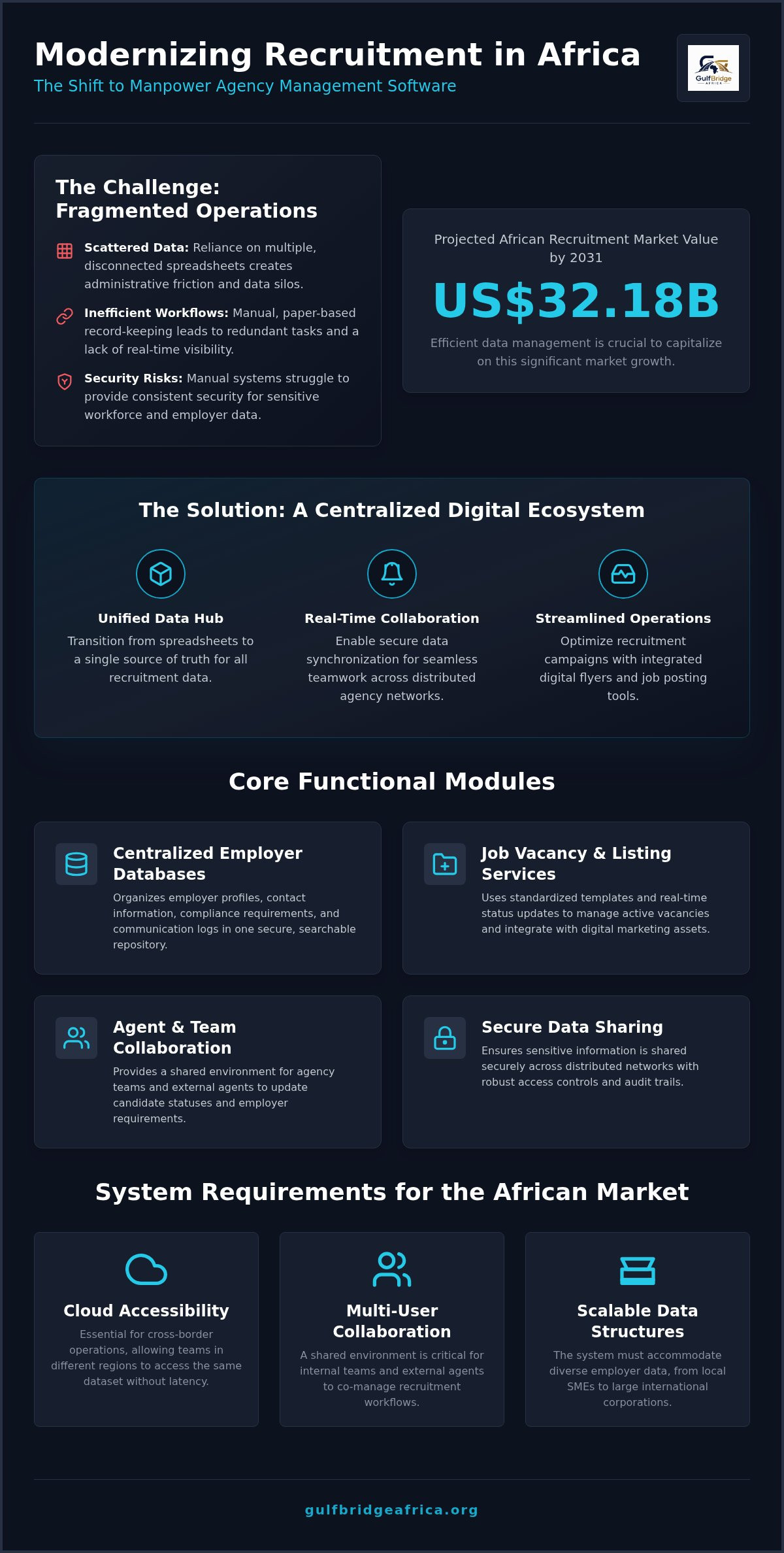
Fragmented data management remains the primary obstacle to operational efficiency for recruitment agencies in a market projected to reach US$32.18 billion by 2031. Relying on multiple spreadsheets to track vacancies and agent progress creates avoidable administrative friction and data silos. Most professionals understand that centralized data is the primary requirement for scaling recruitment activities effectively. Maintaining security for sensitive workforce data is a critical operational necessity that manual systems cannot consistently provide. This guide provides a systematic overview of manpower agency management software Africa features, operational benefits, and data management standards. It's designed to assist agencies in moving from passive storage to active, collaborative workflows. This document outlines the specific utilities required for centralized data management, improved agent-employer collaboration, and streamlined job posting processes. This functional overview establishes a clear framework for implementing systematic oversight and professional data handling. You'll find a logical breakdown of how software tools replace fragmented processes with a single, reliable environment for task management.
Key Takeaways
- Transition from fragmented spreadsheets to a centralized digital system to establish operational efficiency and systematic data organization.
- Utilize manpower agency management software Africa to centralize employer profiles and manage active job vacancies through a secure, cloud-based portal.
- Enhance team coordination by implementing real-time data synchronization for the secure sharing of sensitive employer information across distributed networks.
- Optimize recruitment campaigns by integrating digital flyers and systematic job posting tools to replace manual, ad-hoc outreach methods.
- Build a reliable framework for workforce data by utilizing specialized platforms designed to organize and track recruitment progress in a single environment.
What is Manpower Agency Management Software in the African Context?
Manpower agency management software Africa is a centralized digital system designed to organize recruitment data and operational workflows. It serves as a functional replacement for manual, paper-based record-keeping. Agencies utilize these platforms to transition from fragmented spreadsheets to cloud-based data management. This shift ensures that all administrative tasks remain searchable and accessible. To understand the broader technical category, consider the question, What is Manpower Agency Management Software? In the African recruitment sector, this software integrates employer databases, job posting portals, and agent management tools. The core purpose is to facilitate the systematic tracking and sharing of workforce information between all stakeholders.
Key Characteristics of Regional Recruitment Systems
A functional system must support the specific logistical requirements of the African market. Cloud accessibility is the primary requirement for cross-border operations. It allows teams in different geographical regions to access the same dataset without latency. Multi-user collaboration is another essential feature. Agency teams and external agents require a shared environment to update candidate statuses and employer requirements. The data structures must be scalable to accommodate various employer information types, from local small businesses to international corporations. A systematic approach ensures that data remains consistent regardless of the team size or the volume of vacancies handled.
Operational Challenges Solved by Systematic Software
Implementing a centralized platform addresses several recurring administrative bottlenecks. It eliminates data silos where information is trapped within individual agent files or offline documents. Redundant record-keeping is reduced because every team member interacts with a single source of truth. Standardization is a significant outcome of this process. The software enforces uniform recruitment documentation and agent reporting formats. This creates a predictable workflow for everyone involved. Agencies also gain enhanced visibility into job vacancy status. They can monitor fulfillment rates in real-time, allowing for immediate adjustments to recruitment strategies. This level of oversight is difficult to achieve with manual systems.
Core Functional Modules of a Modern Manpower Management Platform
Modern manpower agency management software Africa utilizes specific functional modules to maintain operational order. These modules replace manual tracking with digital frameworks designed for high-volume data handling. The system architecture typically centers on four primary pillars: employer data management, job posting services, agent resource portals, and secure data sharing tools. Each module performs a distinct administrative function while remaining integrated within the larger ecosystem. This integration ensures that information flows from the employer profile to the agent's recruitment flyer without manual re-entry. Agencies use these tools to establish a single source of truth for all recruitment activities.
Centralized Employer Databases
A systematic database organizes multiple employer data types into a single repository. It stores detailed profiles including contact information, industry specifications, and specific compliance requirements. The system tracks historical recruitment data and communication logs to ensure continuity in service delivery. For instance, reviewing how recruitment databases in South Africa function provides a model for systematic public sector organization. Private agencies benefit from similar search and filter functions that allow for rapid data retrieval during urgent hiring cycles. Every interaction is recorded, creating a reliable audit trail for future reference and oversight.
Job Vacancy and Listing Services
Standardized templates for job descriptions ensure that all requirements are clearly communicated to potential candidates. These templates prevent the omission of critical skills or certification needs that often occurs in manual systems. Real-time updates on vacancy status allow recruitment teams to see which positions are filled and which require more attention. Integration with digital marketing assets enables a wider reach across various platforms. This systematic approach reduces the time spent on manual posting and status tracking. Utilizing an employer data management platform ensures these listings remain synchronized with current employer needs.
Agent Resource Portals and Secure Sharing
Unlike general HR software that focuses on internal payroll, specialized manpower platforms prioritize the relationship between the agency and its external agents. The Agent Resource Portal serves as a dedicated environment where agents access approved marketing materials and job specifications. This portal eliminates the need for fragmented communication via email or messaging apps. Data sharing tools facilitate the secure transfer of employer requirements without compromising data integrity. This creates a collaborative environment where agents operate with the same information as the core agency team. The result is a standardized recruitment process that maintains high data management standards across the entire agent network.
Collaborative Workflows and Data Sharing for Recruitment Teams
Effective manpower agency management software Africa requires real-time data synchronization for distributed teams. Cloud-based systems facilitate the secure sharing of sensitive employer information between stakeholders. This approach replaces fragmented email-based communication with centralized platform-based collaboration. Role-based access controls ensure that internal staff and external recruitment agents only access data relevant to their specific tasks. This systematic organization prevents unauthorized data exposure while maintaining operational speed. Teams transition from reactive file-sharing to proactive data management within a single environment. This shift ensures that every agent and staff member works with the most current dataset available. It eliminates the risk of using outdated job descriptions or incorrect employer contact details. Centralized systems track the progress of each vacancy, providing a clear visual representation of the recruitment pipeline.
Streamlining Communication Between Agencies and Agents
Recruitment agents require immediate access to recruitment flyers and branding materials to execute their tasks. A centralized agent resource portal provides these assets without the need for manual distribution. Automated notifications alert teams to new job listings or data updates instantly. These alerts reduce the time spent on manual follow-ups and status checks. Standardized reporting formats ensure that agent feedback remains consistent and actionable across the entire network. This structure reduces administrative friction and ensures all parties operate from the same information set. Agencies maintain control over their branding while empowering agents with the tools they need for successful outreach. This collaborative framework allows agencies to scale their operations without increasing the administrative burden on internal staff.
Ensuring Data Integrity and Security
Protecting sensitive workforce data is a primary operational requirement for modern agencies. Best practices include implementing secure access protocols and data encryption within the management platform. Audit trails provide a chronological record of data modifications and access events. This level of oversight is necessary for maintaining accountability within recruitment teams. Systematic software ensures that sensitive employer profiles are not stored on insecure local devices or shared via unencrypted channels. Agencies must implement specific security measures to maintain high data standards:
- Encryption of sensitive employer profiles and candidate records.
- Multi-factor authentication for all staff and external agent logins.
- Regular automated backups to prevent data loss from hardware failure.
- Chronological audit trails for tracking all data entries and modifications.
Compliance with regional data protection standards in Africa is mandatory as regulatory landscapes evolve. For example, the 2026 Somalia recruitment regulations and South Africa's Employment Services Amendment Bill indicate a trend toward stricter data and operational oversight. Agencies that implement structured software systems are better positioned to meet these evolving legal requirements while protecting their professional reputation. Maintaining high data integrity standards builds trust with international employers who require evidence of secure data handling.
Optimizing Recruitment Campaigns with Digital Tools
Digital tools transform recruitment campaigns from manual outreach to systematic operations. Manpower agency management software Africa provides the necessary infrastructure for this transition. Agencies use these platforms to coordinate marketing assets and track candidate acquisition channels. This systematic approach ensures that every recruitment campaign follows a predefined workflow. Integrating marketing assets directly into the agent resource portal allows for immediate deployment by external teams. Tracking the effectiveness of different recruitment channels through the software provides data-driven insights into campaign performance. This oversight allows agencies to allocate resources to the most productive platforms. It's a method that replaces guesswork with measurable results.
Designing and Distributing Recruitment Flyers
Digital recruitment flyers serve as the primary marketing tool for modern African agencies. A functional recruitment flyer must include specific elements to be effective. These elements include clear job titles, specific salary ranges, and mandatory qualification requirements. Standardizing flyer design ensures consistent brand representation across all agent networks. Agencies use software templates to maintain this consistency without manual design work. Digital distribution methods enable rapid agency outreach across social media and mobile messaging platforms. This speed is essential in high-demand sectors like healthcare, construction, or manufacturing. Agencies can create professional recruitment flyers to streamline their candidate sourcing process.
Managing Job Vacancy Listings Efficiently
Centralized portals allow agencies to publish and update vacancies through a structured process. Users follow specific steps to list new positions, ensuring all required fields are populated. Categorizing listings by industry, region, and required skills facilitates efficient candidate matching. This organization allows agents to filter for relevant opportunities quickly. Archiving fulfilled vacancies preserves data for future reference and reporting. This historical data helps agencies analyze seasonal hiring trends and employer demand patterns in sectors like technology and services. Organizing these listings within a dedicated platform prevents the duplication of effort across different teams. Efficient management of these listings is a core function of manpower agency management software Africa.
Systematic archiving also supports compliance with local regulations. Keeping records of past listings allows agencies to demonstrate transparent hiring practices during audits. The software maintains a complete history of every vacancy from publication to fulfillment. This level of detail is necessary for agencies operating in jurisdictions with strict labor reporting requirements. The transition to digital vacancy management ensures that no data is lost during personnel changes within the agency. Every team member has access to the same historical context and active vacancy status.
Implementing the GulfBridge Africa Platform for Operational Success
GulfBridge Africa provides a cloud-based environment for systematic data handling. It functions as a specialized manpower agency management software Africa. The platform integrates employer data management with agent coordination tools. Users access the system through a SaaS interface to organize recruitment workflows. This centralized approach ensures that all workforce data remains accessible across the African region. Agencies use the platform to replace fragmented manual processes with a single, reliable framework. This transition establishes a clear operational structure for both internal teams and external partners. The platform remains an unobtrusive part of the user's workflow, prioritizing task completion over brand presence.
Systematic Onboarding for Recruitment Agencies
Onboarding begins with the initial configuration of the Employer Data Management Platform. Administrators enter core employer profiles and establish specific data management protocols for the agency. The system allows for the invitation of internal team members and external recruitment agents to a collaborative workspace. This setup defines role-based access to ensure data security and integrity. Unlike complex enterprise systems that require months of preparation, this regional platform allows for immediate operational utility. Agencies establish a clear organizational structure from the first day of implementation. This systematic start prevents the accumulation of disorganized data as the agency scales its operations.
Maximizing Platform Utility for Daily Operations
Daily workflows center on tracking active job vacancies and monitoring recruitment progress. The platform serves as a single source of truth for all employer data and communication logs. Agents utilize the Agent Resource Portal to access approved recruitment flyers and job specifications. This ensures that all outreach remains standardized and professional. Managing job postings through the SaaS interface allows for real-time updates across the entire team. Agencies can access resources and support through the GulfBridge Africa portal. This systematic oversight leads to improved fulfillment rates and better collaboration between agents and employers. It provides a methodical guide for managing the complexities of regional recruitment.
The platform functions as a silent partner in the agency's workflow. It provides the necessary structure for scaling recruitment operations without increasing administrative complexity. Every action taken within the system contributes to a comprehensive audit trail. This level of organization is essential for maintaining professional standards in the African recruitment sector. The software ensures that data remains the central focus of every interaction. It's a tool designed for professionals who value stability and systematic logic in their daily tasks. Using these digital modules allows agencies to maintain a high level of oversight with minimal manual intervention.
Establishing Systematic Operational Standards
Transitioning to a digital framework replaces fragmented administrative tasks with a single, reliable environment. Centralizing employer data and vacancy listings ensures that all team members operate from a consistent information set. It's a necessary step for maintaining data integrity and meeting evolving regional regulatory requirements. Agencies must move beyond manual record-keeping to establish a professional audit trail for every recruitment campaign. A methodical approach to data organization reduces administrative friction and supports long-term operational stability.
Agencies require stable tools to manage complex recruitment workflows across different territories. Utilizing specialized manpower agency management software Africa provides the necessary oversight for both team-based and solo operations. The GulfBridge Africa platform is specialized for the African recruitment market, offering cloud-based accessibility and integrated tools for managing job postings and agent resources. These features support a structured workflow for organizing, tracking, and sharing data in one place. Explore the GulfBridge Africa Data Management Platform to establish a professional data handling framework. Implementing these systematic tools ensures your agency remains a reliable partner in the regional recruitment sector.
Frequently Asked Questions
What are the primary benefits of using manpower agency software in Africa?
The primary benefits include centralized data management and reduced administrative friction. Using manpower agency management software Africa replaces fragmented spreadsheets with a single digital repository. This transition ensures that all recruitment progress remains searchable and accessible. Agencies gain systematic oversight of vacancy fulfillment rates and agent performance. This structure facilitates higher operational standards by standardizing documentation across the entire organization. It's an essential tool for scaling operations and maintaining a reliable audit trail for every recruitment task.
How does a cloud-based recruitment database improve team collaboration?
A cloud-based recruitment database enables real-time data synchronization between distributed teams. Every team member accesses the same dataset, which eliminates the risk of using outdated information. Secure sharing of sensitive employer requirements happens within the platform rather than through unencrypted email. Role-based access controls ensure that staff and external agents only see data relevant to their specific tasks. This systematic approach establishes a clear audit trail for all data modifications. It's a functional solution for cross-border operations.
Can this software help in managing multiple types of employer data?
Yes, the system is designed to organize and store various employer profile types systematically. It tracks contact information, industry specifications, and specific compliance requirements for each client. Historical recruitment data and communication logs remain attached to the profile for future reference. This organization allows for rapid data retrieval during urgent hiring cycles. Agencies use these databases to maintain a comprehensive record of employer needs and past fulfillment successes. It functions as a reliable source of truth for all administrative activities.
What features should I look for in an agent resource portal?
An effective agent resource portal should provide centralized access to approved recruitment materials and job specifications. It functions as a dedicated environment where agents retrieve recruitment flyers and branding assets. Standardized reporting formats within the portal ensure that agent feedback remains consistent. Automated notifications alert agents to new job listings or data updates instantly. These features eliminate the need for manual distribution of assets via messaging apps. A structured portal maintains brand consistency while empowering agents with necessary recruitment tools.
Is it possible to manage job vacancies and recruitment flyers in one system?
Integrated systems allow for the simultaneous management of job vacancies and digital marketing assets. Users can list a new position and immediately generate or attach a recruitment flyer within the same interface. This ensures that the information on the flyer matches the current vacancy data exactly. manpower agency management software Africa streamlines this process by linking the job posting service to the agent portal. This integration reduces manual data entry and prevents errors in job requirements or salary ranges. It's a methodical way to coordinate marketing.
How does the platform ensure the security of sensitive employer records?
The platform utilizes encryption and multi-factor authentication to protect sensitive employer records. Every data entry or modification is recorded in a chronological audit trail to maintain accountability. Systematic software ensures that sensitive profiles aren't stored on insecure local devices. Regular automated backups prevent data loss from hardware failures or local disruptions. These security measures are necessary for compliance with evolving data protection standards. Maintaining high security standards builds trust with international employers who prioritize secure data handling and professional oversight.
Does the software support both solo recruitment agents and large agencies?
The software architecture supports both solo user workflows and multi-user team environments. Solo agents use the platform to organize their individual employer data and track their own recruitment progress. Large agencies utilize the collaborative workspace to coordinate dozens of agents and staff members simultaneously. The system remains scalable, allowing users to add more team members or employer profiles as their business grows. This flexibility ensures that the platform provides utility regardless of the agency's current size or organizational complexity.
What is the role of digital flyers in manpower recruitment campaigns?
Digital flyers serve as standardized marketing assets for rapid candidate outreach across mobile and social platforms. They communicate essential job details like titles, salary ranges, and mandatory qualifications in a concise format. Standardizing these designs ensures consistent brand representation across all agent networks. Agencies distribute these flyers digitally to reach candidates in high-demand sectors like construction and healthcare quickly. Integrating these flyers into a management platform ensures that agents always use the most current version of the recruitment materials.


