

Maintaining employer records in disconnected spreadsheets is an operational liability that slows down recruitment cycles. Most agencies face the daily reality of lost contact details, untracked agent assignments, and fragmented data silos. These inefficiencies don't just waste time; they compromise the security of sensitive contract terms and recruitment data. To solve these issues, you must organize employer information online within a centralized framework. It's difficult to scale operations when your team can't access a single source of truth for client information.
This article provides the operational framework required to move from manual tracking to a cloud-based employer data management system. You'll learn how to establish standardized data entry protocols and build a searchable database of all employer clients. We'll also cover methods for faster retrieval of job vacancy details for recruitment campaigns. This systematic approach ensures that every team member can access the information they need to execute tasks without delay. Following these steps will transform your data from a static list into a functional asset that supports team collaboration and operational efficiency.
Key Takeaways
- Quantify the operational impact of data silos and identify how manual retrieval processes reduce team efficiency.
- Establish a framework to organize employer information online using centralized profiles that track contact details and contract terms.
- Compare the security and collaboration limitations of local spreadsheets against the utility of a cloud-based recruitment database.
- Learn the five-step process for auditing, cleaning, and migrating employer records into a standardized management system.
- Understand how a dedicated employer data management platform facilitates better coordination between regional agents and core recruitment teams.
The Operational Cost of Disorganized Employer Data
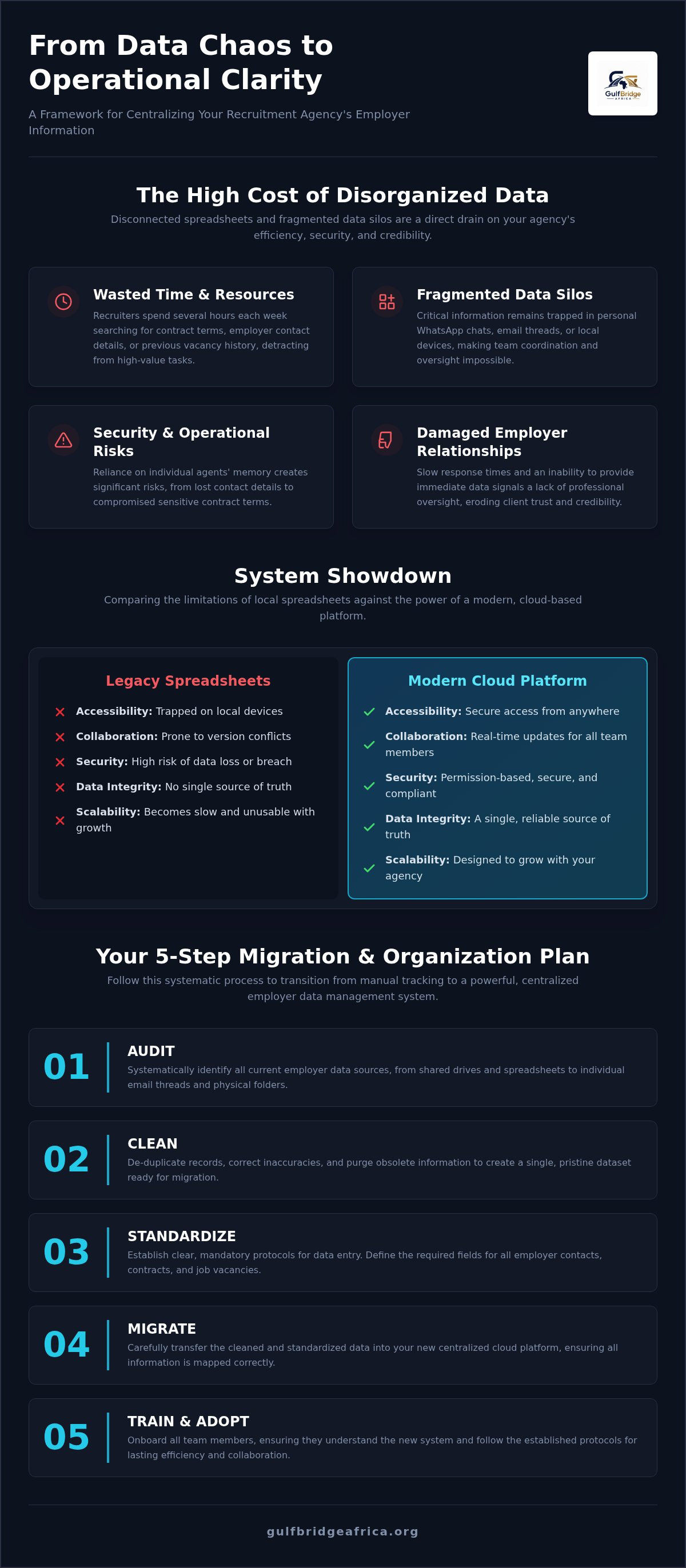
Disorganized data creates measurable friction in daily recruitment operations. Recruiters often spend several hours each week searching for contract terms, employer contact details, or previous vacancy history. This search time directly subtracts from high-value tasks like candidate sourcing and placement. When agencies fail to organize employer information online, they rely on the memory of individual agents rather than a shared system. This reliance creates significant operational risks.
In regional African recruitment teams, information often remains trapped within local offices or personal devices. This fragmentation leads to missed opportunities where a vacancy in one region could have been filled by a candidate from another. Without a centralized Human Resource Management System (HRMS) or a dedicated data platform, team coordination becomes impossible. Agent morale also suffers. High-performing recruiters become frustrated when they can't find the information required to close a deal or update a client.
Identifying Data Silos in Your Agency
Data silos occur when information is accessible to only one person or department. In many agencies, critical employer details are trapped in personal WhatsApp chats or email threads. This makes it impossible for managers to oversee progress or for colleagues to provide coverage during an agent's absence. Physical folders in regional offices present a similar danger; they can't be searched or backed up easily. You'll know your spreadsheet system has reached capacity when it becomes slow to load, difficult to filter, or when multiple versions of the same file exist across the team.
Impact on Employer Relationships
Disorganized records directly damage professional credibility. When an employer asks for a progress report and the recruiter can't provide immediate data, it signals a lack of professional oversight. Slow response times often result from the need to manually compile information from various sources. To maintain strong relationships, you must organize employer information online to ensure every team member provides consistent answers. A centralized system allows for the rapid generation of vacancy reports and ensures that communication history is visible to everyone involved in the account. This consistency builds trust and positions the agency as a reliable partner.
Defining a Centralized Employer Information System
A centralized employer information system is a cloud-based framework that consolidates all client records into a single, accessible location. It replaces fragmented local files with a structured environment for tracking and sharing data across a recruitment agency. To organize employer information online effectively, agencies must transition from passive storage to active data management. This transition is a prerequisite for scaling operations. It allows managers to oversee multiple accounts and regional teams without the need for physical oversight or manual file transfers.
A functional system includes contact profiles, contract terms, and job vacancy history. It also addresses data privacy and compliance by ensuring that sensitive documents are stored within a secure, permission-based environment. Centralized access supports remote recruitment agents by providing the same data visibility regardless of their physical location. This ensures that a recruiter in a regional office can access the same contract terms as the head office staff. Using a dedicated employer data management platform ensures that these operational standards remain consistent across the entire organization.
Standardizing Employer Data Types
Operational efficiency requires precise categorization of all incoming data. Primary data types include employer contact details, tax identification numbers, and signed service agreements. Legal documentation for cross-border hiring must be stored alongside these records to prevent administrative delays during the placement process. Tracking historical job postings helps agents understand an employer's hiring patterns and past campaign success rates. Standardizing these inputs ensures that every record contains the necessary information for recruitment execution.
The Architecture of a Recruitment Database
A robust database distinguishes between static employer data and dynamic vacancy tracking. Static data includes company addresses and legal names which rarely change. Dynamic data tracks active vacancies, candidate pipelines, and interview schedules. Agencies that organize employer information online through a modular architecture reduce the time spent on administrative maintenance. Modular data entry allows for rapid scanning and retrieval of specific details during high-volume recruitment periods. Implementing a consistent naming convention for digital files prevents the duplication of employer records and ensures that files are sorted logically for quick retrieval.
Spreadsheets vs. Cloud-Based Management Platforms
Spreadsheets are designed for individual calculations and static data storage. They aren't built for the multi-user workflows required in modern recruitment. When agencies organize employer information online using flat files, they encounter constant synchronization issues. A cloud-based platform solves this by providing a single, unified database. This ensures that every agent sees the same record at the same time. This transition from manual files to specialized systems is a prerequisite for any agency aiming to scale its operations across multiple regions.
The long-term ROI of migrating to a dedicated platform is measurable through reduced administrative hours. Manual data retrieval is a slow process that subtracts from sourcing time. A dedicated system acts as a silent partner in your workflow, maintaining organizational logic without constant manual intervention. Agencies that organize employer information online through specialized software achieve higher operational stability. They don't lose client records when an agent leaves the company or when a local hard drive fails.
Limitations of Manual Data Entry
Version control is a frequent failure point in shared spreadsheet environments. Different team members often save conflicting copies of the same employer record. This leads to data corruption and the loss of critical updates. Manual entry also lacks a functional audit trail. Managers can't see who modified a contract term or when a job vacancy status was last updated. Generating reports from these systems is a time-consuming task. It requires complex formulas that often break when new rows are added. These technical failures create unnecessary friction in the recruitment process.
Advantages of Cloud SaaS for Agencies
Cloud SaaS platforms offer universal access for regional teams. Recruitment agents can log in from any device to retrieve employer profiles or vacancy details. This accessibility is critical for agencies operating across diverse African markets. These platforms provide professional-grade data encryption and automated backups. This protection is superior to local storage, which is vulnerable to theft or hardware damage. Many systems also include integrated tools for job posting and recruitment flyer generation. These features allow agents to move from data entry to marketing in a single, streamlined workflow. Recent industry data indicates that 93% of recruiters plan to increase their use of AI and automated tools in 2026. Cloud-based platforms are the primary delivery method for these advanced recruitment technologies. This integration helps teams maintain a competitive edge in a tight labor market.
5 Steps to Organize Employer Information Online
Transitioning from fragmented spreadsheets to a structured system requires a methodical approach. Agencies must follow a specific sequence to ensure data remains accurate and accessible during the migration process. To organize employer information online effectively, you must move beyond simple storage and establish a functional workflow. This process eliminates the reliance on individual memory and creates a permanent institutional record. The following five steps provide the framework for this transition.
- Step 1: Audit and clean existing employer records for migration.
- Step 2: Establish a standardized data entry protocol for the team.
- Step 3: Centralize all employer documentation in a cloud database.
- Step 4: Integrate recruitment agent resources and portal access.
- Step 5: Implement a regular maintenance schedule for data accuracy.
Data Auditing and Cleaning
Data migration starts with an audit of current records. Identify and remove duplicate employer entries to prevent confusion in the new system. Verify the accuracy of contact information; outdated phone numbers or email addresses hinder recruitment speed. Standardize all data points before uploading them. Use consistent formats for dates, office locations, and job category terminology. This standardization ensures that the search function in your new database returns accurate results. Cleaning your data now prevents the transfer of errors into your centralized system.
Team Training and Protocol Adoption
A management system is only effective if the whole team uses it consistently. Define clear roles for who enters new employer data and who provides oversight. Create a simple user guide that outlines how to organize employer information online using your chosen platform. Setting expectations for real-time updates is essential. Agents must update employer profiles immediately after a client interaction or a change in vacancy status. This ensures that the database remains a live reflection of your agency operations. You can organize your recruitment operations more effectively by providing agents with a structured portal for these updates.
Maintaining Data Integrity Over Time
Systematic management requires ongoing effort to remain useful. Schedule monthly audits to verify that agents are following the established data entry protocols. Update job vacancy statuses regularly to reflect current recruitment progress. This prevents candidates from being sent to filled positions. Archive inactive employer data to maintain system speed and focus your team on active accounts. Archiving does not mean deleting; it moves historical records to a secondary area where they remain searchable but don't clutter the primary workspace. This lifecycle management ensures that your database remains a high-performance tool for your recruitment campaigns.
Systematic Employer Management with GulfBridge Africa
The GulfBridge Africa Employer Data Management Platform provides the technical architecture required to organize employer information online. It functions as a centralized hub for all client records, replacing fragmented manual processes with a structured cloud-based framework. This system is designed specifically for the operational needs of African recruitment agencies. By using this platform, agencies maintain professional oversight of regional teams and remote agents. It acts as a silent, reliable partner in your daily workflow, providing the stability needed for high-volume operations.
Systematic management reduces the time spent on administrative data retrieval. The platform integrates a Job Posting Service directly with employer profiles. This integration ensures that vacancy details remain accurate and consistent with the original client request. Faster vacancy fulfillment results from having all necessary information in one place. It eliminates the delays caused by searching through multiple email threads or local spreadsheets. Agencies use these integrated job posting tools to maintain a consistent pace in their recruitment cycles and improve overall service delivery.
Collaborative Tools for Recruitment Teams
Team members share workforce data securely within a single interface. This real-time access prevents the formation of data silos that often hinder agency growth. Managers track recruitment progress using systematic logic rather than relying on verbal updates or unverified reports. The platform handles multiple data types, including contact details, tax documentation, and historical job postings. This versatility supports complex recruitment campaigns across different jurisdictions. The Agent Resource Portal allows for coordinated workforce management by providing agents with the specific documentation and resources they need for their assignments. Systematic organization is the foundation for scaling these operations effectively across new regions.
Next Steps for Agency Optimization
Transitioning current records to the GulfBridge Africa cloud platform is the first step toward optimization. You can organize employer information online by migrating existing spreadsheets into the standardized system. This migration process follows the audit and cleaning steps required to maintain data integrity. Agencies customize the Agent Resource Portal to match their specific operational requirements. This customization ensures that agents only see the data relevant to their assigned tasks, improving security and focus. To enhance campaign visibility, the platform provides digital recruitment flyers directly within the dashboard. These tools allow teams to move from data organization to active marketing immediately. A structured approach to data ensures long-term system speed and accuracy.
Organize your employer data systematically with GulfBridge Africa.
Establishing Operational Stability through Data Centralization
Transitioning from manual spreadsheets to a centralized system is an operational necessity for modern recruitment agencies. This shift eliminates data silos and ensures that regional teams access the same employer records in real-time. You've learned that auditing existing data and establishing standardized entry protocols are the first steps to success. When you organize employer information online, you create a searchable database that speeds up vacancy fulfillment and protects sensitive contract terms. This systematic approach reduces administrative friction and allows your team to focus on placement results.
GulfBridge Africa provides the framework for this transition through cloud-based data management and dedicated agent resource portals. The platform also includes integrated job vacancy management and digital recruitment flyers to support your marketing efforts. These features work together to bring order to your professional environment. Streamline your agency operations with GulfBridge Africa today. Implementing these structured processes will strengthen your agency's capacity to scale operations across multiple regions.
Frequently Asked Questions
How do I move my existing employer spreadsheets to an online system?
You move existing spreadsheets by first auditing the data for duplicates and inaccuracies. Export your current files into a standardized format like a CSV file. Map the columns in your spreadsheet to the corresponding fields within the online management platform. This process ensures that contact details and contract terms transfer correctly. Standardizing the data before migration prevents technical errors and maintains the logic of your new centralized system.
Is a cloud-based recruitment database secure for sensitive employer data?
Cloud-based recruitment databases are secure because they utilize professional-grade encryption and automated backups. These systems provide permission-based access, ensuring that only authorized personnel view sensitive contract terms or tax documentation. Unlike local spreadsheets, cloud systems are protected from physical hardware failure and unauthorized local access. Centralizing your data in a secure environment helps your agency comply with data privacy regulations and prevents the loss of critical client information.
Can multiple recruitment agents access the same employer information simultaneously?
Multiple recruitment agents can access the same employer records simultaneously through a cloud-based interface. The system updates in real-time, which eliminates the risk of version control errors common in shared spreadsheets. This feature is essential for regional teams that need to coordinate on the same accounts without duplicating effort. Real-time access ensures that every agent sees the most current vacancy status and communication history, which improves overall team coordination and operational speed.
What are the essential data types I should track for every employer?
You should track primary contact details, signed service agreements, and tax identification numbers for every employer. It's also necessary to maintain a record of historical job postings and specific administrative requirements for cross-border hiring. Tracking these data types allows you to organize employer information online with enough detail to execute recruitment campaigns efficiently. Including previous vacancy success rates helps your team understand the employer's hiring patterns and refine future sourcing strategies.
How does organizing employer data online improve recruitment speed?
Organizing employer data online improves recruitment speed by reducing the time spent on manual information retrieval. Recruiters can search a centralized database to find vacancy details or contact information instantly. This eliminates the need to scan through personal email threads or local folders. Faster access to job requirements allows agents to begin sourcing candidates immediately. A systematic database ensures that all team members have the information required to move from a job request to a placement without delay.
Do I need specialized IT skills to manage a cloud-based recruitment platform?
You don't need specialized IT skills to manage a cloud-based recruitment platform. These systems are designed with a utilitarian interface that mirrors standard administrative software. Most platforms utilize a modular layout that guides users through data entry and retrieval tasks. Basic computer literacy and an understanding of your agency's operational workflow are the only prerequisites. The platform handles the technical backend, such as encryption and backups, allowing your team to focus entirely on task management and organization.
What is the best way to handle job vacancy listings for multiple employers?
The best way to handle multiple job vacancy listings is to use an integrated job posting service linked to your employer profiles. This method allows you to track the status of every vacancy within a single interface. You can categorize listings by employer, location, or job type for rapid filtering. Using a centralized system ensures that job details remain consistent across all recruitment flyers and marketing campaigns. This prevents administrative errors and ensures that agents always work with accurate vacancy data.
How can I track the performance of recruitment agents using an online portal?
You can track agent performance by reviewing the audit trails and vacancy status updates within the online portal. The system records which agent is assigned to specific employers and tracks their progress in filling active vacancies. This transparency allows managers to identify bottlenecks in the recruitment cycle and reassign resources where necessary. Utilizing an Agent Resource Portal ensures that all work is documented systematically, providing a clear overview of team productivity without the need for manual reporting.


