

Managing a recruitment pipeline between Africa and the Gulf is an exercise in data management rather than simple talent sourcing. Most agencies currently operate with fragmented employer records and limited visibility into their recruitment agent activities. You probably recognize that manual tracking of job vacancies across multiple regions creates operational bottlenecks and data silos. This article provides a functional guide to selecting and implementing recruitment software for Gulf jobs from Africa designed for the specific requirements of this manpower corridor.
We'll outline the process for establishing a centralized employer database and deploying systematic job posting tools. The following sections also detail how to use an agent resource portal to streamline regional collaboration and improve oversight. This guide focuses on the practical reality of task management and organizational efficiency for your 2026 workflow. By following this framework, you can replace manual processes with a structured system that prioritizes clarity and operational control. The focus remains entirely on the utility of the data system to ensure your agency maintains a reliable and predictable workflow during every stage of the recruitment cycle.
Key Takeaways
- Centralize fragmented employer and agent data into a single, structured database to eliminate manual tracking errors across regional offices.
- Identify the specific technical requirements for recruitment software for Gulf jobs from Africa to ensure cross-border data compatibility and security.
- Follow a systematic implementation process that begins with a comprehensive data audit of existing recruitment records and agent activities.
- Utilize an integrated agent resource portal to maintain oversight of regional workflows and standardize the job posting process.
- Deploy digital recruitment flyers and centralized vacancy management tools to improve the speed and accuracy of candidate sourcing.
Operational Challenges in Africa-to-Gulf Recruitment
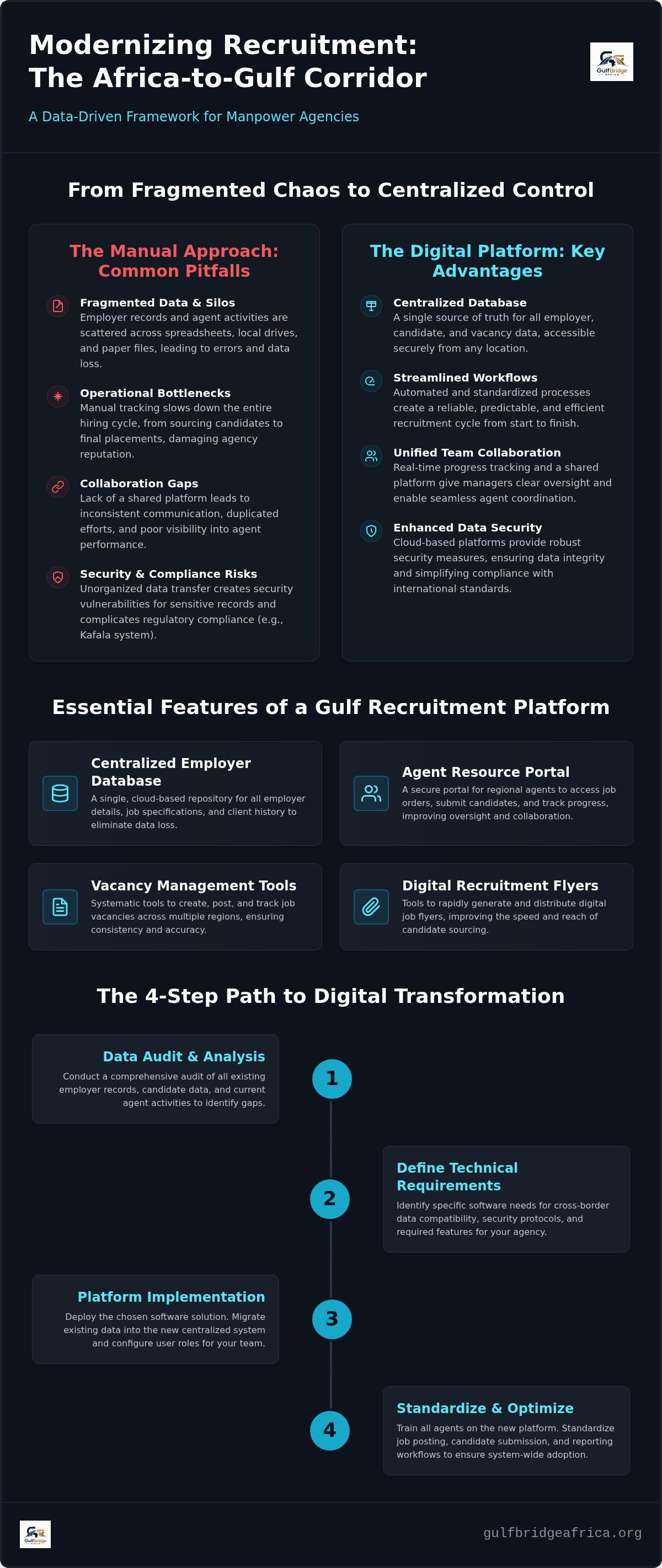
Managing recruitment across the Africa-to-Gulf corridor involves high volumes of administrative data. Regional manpower agencies often face fragmented employer information. This fragmentation slows down the hiring cycle. It creates operational bottlenecks. Agencies that rely on manual tracking systems struggle to maintain accuracy. These manual processes lead to data silos where information is trapped in local drives or paper files. Cloud-based accessibility is a requirement for modern recruitment. It ensures that teams in different geographical locations access the same data set. Recruitment software for Gulf jobs from Africa provides the necessary framework to manage these complexities.
The Data Management Hurdle
Fragmented employer information directly impacts the speed of placements. When an agency lacks a centralized employer record management system, data remains disorganized. This lack of organization damages an agency's reputation with Gulf-based clients. Employers expect rapid responses and accurate candidate matches. Retrieving specific job requirements becomes a time-consuming task without a systematic digital tool. Data organization is essential to meet the administrative demands of the Kafala sponsorship system. Accurate record-keeping ensures compliance with these regulatory frameworks. A systematic approach prevents the loss of critical employer data during the recruitment cycle. It allows for a predictable workflow that prioritizes operational efficiency.
Agent and Team Collaboration Gaps
Coordinating multiple recruitment agents requires centralized tools. Agencies often work with regional sub-agents to source talent across different African nations. Without a shared platform, workforce data sharing becomes unorganized. This creates security risks and leads to the duplication of efforts. Real-time progress tracking is essential for team coordination. A structured system provides immediate visibility into agent activities. This oversight reduces the risk of operational failure. Effective collaboration requires a predictable rhythm of updates. The following operational gaps often occur in manual systems:
- Loss of candidate data during transmission between regional offices.
- Lack of visibility into agent performance and sourcing progress.
- Inconsistent communication regarding job vacancy status.
- Security vulnerabilities during the transfer of sensitive personal records.
Effective implementation of recruitment software for Gulf jobs from Africa eliminates these collaboration gaps. Modern agencies use digital platforms to bring order to their professional environment. These tools provide a clear organizational outcome for every task. They allow managers to monitor the entire recruitment pipeline from a single interface. This systematic logic is necessary for handling the scale of the Africa-to-Gulf manpower corridor. It transforms a chaotic process into a series of manageable, modular steps.
Essential Features of a Gulf Recruitment Data Platform
A functional recruitment system requires specific technical features to handle the Africa-to-Gulf corridor. It must move beyond a simple applicant tracking system. Recruitment software for Gulf jobs from Africa acts as a central repository for all operational data. This includes employer details, job specifications, and agent interactions. Having these features in one place creates a predictable workflow. It allows your agency to transition from manual spreadsheets to a structured digital environment. This systematic approach ensures that every team member follows the same operational logic.
Centralized Employer Record Management
Systematic organization starts with a cloud-based database. You need to store diverse employer data types in a single location. Standardized formats ensure that every team member understands the requirements of a specific vacancy. This level of organization is crucial for complying with IOM's migration governance in the MENA region. Centralized records allow for better agency oversight. You can track which employers have active vacancies and which require follow-ups. This prevents data loss and ensures that no client request is ignored. A centralized system provides the framework for long-term data security and administrative accuracy.
Specialized Recruitment Marketing Tools
Speed is a critical factor in manpower recruitment. Agencies must source candidates rapidly once a job order is confirmed. Digital recruitment flyers allow for immediate distribution across messaging apps and social media. Using standardized advertisements ensures brand consistency across multiple platforms. You can manage these assets from a central hub to ensure all agents use the most recent information. This systematic approach to marketing reduces the time spent on manual design tasks. For agencies seeking these specific tools, an Employer Data Management Platform provides the necessary structure for 2026 operations.
An integrated agent resource portal is another essential feature. This tool allows external recruitment partners to view available roles and submit data directly. It eliminates the need for endless email chains and unorganized document sharing. An integrated job posting service simplifies the process of reaching potential candidates in different African regions. You can track the performance of each posting to optimize your sourcing strategy. This modular approach to recruitment ensures that every stage of the process is documented and measurable. Each feature serves a specific organizational outcome. The system moves the candidate from initial sourcing to final placement without administrative friction.
Evaluating Recruitment Software for African Agencies
Selecting the right recruitment software for Gulf jobs from Africa requires a methodical assessment of administrative utility. The platform must scale to accommodate multiple employer data types across different industry sectors. It should provide a structured environment for managing hospitality, construction, and domestic service records simultaneously. Agencies need a system that grows with their operations without increasing technical complexity. A utilitarian platform allows for the systematic organization of thousands of records across regional offices.
Security and Data Integrity
Data security is a primary requirement for cross-border recruitment. You must evaluate the cloud security measures of any potential platform to ensure data integrity. The system must protect sensitive workforce data during information sharing between African agencies and Gulf-based employers. Systematic backups are necessary to prevent the loss of critical records. A reliable data system maintains a professional distance while ensuring all information remains accessible to authorized users. This focus on security ensures compliance with regional data protection standards and maintains the stability of your professional environment.
Operational Efficiency and Workflow
A functional platform reduces administrative overhead through systematic task management. It supports collaborative recruitment workflows by providing a single source of truth for regional teams. Ease of use is essential for teams with varying technical skills. The interface should mirror the logic of a standard recruitment workflow to facilitate rapid adoption. Automated task management helps identify bottlenecks in the agency management process. This oversight allows managers to reallocate resources to high-priority job orders. A structured system moves the user from one functional step to the next without the need for elaborate transitions.
Cost-effectiveness remains a key differentiator when comparing different systems. Global SaaS alternatives often feature pricing structures that do not align with the operational realities of regional agencies. These generic tools often lack the specialized features required for the Africa-to-Gulf corridor, such as agent portals or specialized flyer tools. Evaluating a platform based on its specific utility ensures a better return on investment. The focus remains on the utility of the data system rather than marketing hyperbole. A methodical evaluation process helps agencies select a tool that brings order and systematic logic to their recruitment pipeline.
Implementing a Digital HR Data Platform in Lagos
Implementation in the Lagos market requires a structured approach to data transition. Agencies must move away from paper-based or local spreadsheet systems. Effective recruitment software for Gulf jobs from Africa provides the framework for this digital shift. The process begins with a comprehensive review of existing operational data. This ensures that only accurate information enters the new system. Systematic implementation reduces the risk of operational downtime during the transition. It allows your agency to maintain a professional distance from the technical complexities of data migration.
Data Audit and Migration
Conducting a data audit is the first functional step. You must identify and clean legacy recruitment data before migration. This involves removing duplicate employer records and outdated candidate files. Mapping data fields for the new employer management system ensures that information remains searchable. You must align your existing data categories with the cloud-based storage structure. This mapping process facilitates a smooth transition without data loss. A clean database improves the speed of future recruitment cycles. It provides a reliable foundation for all administrative tasks and team coordination.
Team and Agent Onboarding
Onboarding team members requires a focus on functional platform use. Staff must understand the logic of the software interface to maintain operational efficiency. Training should cover the specific steps for data entry and vacancy management. You must also set access levels for different agent resource tiers. This ensures that external partners only view information relevant to their specific tasks. Standardizing the use of digital recruitment flyers is a key part of the onboarding process. It ensures that all agents present a consistent professional image to potential candidates. This repetitive structure reinforces the core functions of the service through a consistent rhythm.
Establishing protocols for ongoing data management is the final step. You must define how information is shared between regional offices and Gulf-based clients. These protocols ensure that data integrity is maintained over time. Regular audits of the system help identify new bottlenecks in the recruitment pipeline. A structured management plan ensures that the platform remains a reliable partner in your workflow. Agencies in Lagos can achieve higher placement volumes by following this methodical implementation guide. To begin this transition, you can access an Employer Data Management Platform designed for regional requirements.
This implementation framework ensures that your agency operates with systematic logic. Every task has a clear subject, action, and result. By removing administrative friction, you allow your team to focus on the utility of the recruitment process. The focus remains on the utility of the platform rather than the personality of the brand. This creates an atmosphere of professional reliability where the focus is entirely on the task at hand.
Streamlining Gulf Recruitment with GulfBridge Africa
GulfBridge Africa provides a specialized operational framework for agencies managing the Africa-to-Gulf corridor. This platform functions as a silent partner in your daily workflow. It prioritizes systematic organization over marketing hyperbole. By utilizing recruitment software for Gulf jobs from Africa, agencies can centralize their entire administrative process. The system provides a structured environment for data handling and team coordination. This approach ensures that all recruitment activities remain transparent and measurable.
The GulfBridge Africa Advantage
The Employer Data Management Platform facilitates systematic data organization. It allows agencies to store and retrieve employer records with immediate utility. Cloud-based collaborative tools ensure that regional teams access the same data set in real time. This integration of employer information and agent resources creates a predictable rhythm of work. The system moves the user through a logical sequence of tasks. It eliminates the need for manual data entry across multiple disconnected spreadsheets. The resulting workflow is efficient and reliable.
The Agent Resource Portal addresses the specific data bridge between agents and employers. It provides a dedicated space for external partners to view active vacancies and submit candidate data. This portal reduces the administrative friction associated with regional coordination. It allows for better oversight of agent performance and sourcing progress. Agencies can monitor the entire pipeline from a single interface. This level of control is necessary for maintaining a stable professional environment in the 2026 recruitment market. It transforms fragmented data into a clear organizational outcome.
Next Steps for Manpower Agencies
Establishing a professional digital presence is a requirement for modern agencies. You must transition from manual tracking to a structured HR data platform. This shift improves operational oversight through continuous workforce data tracking. Managers can identify bottlenecks and reallocate resources based on real-time data. You should also focus on manpower agency management software in Africa to standardize your regional operations. This methodical approach ensures long-term stability and growth.
The Job Posting Service and digital recruitment flyers offer immediate utility for sourcing campaigns. These tools allow for the rapid distribution of standardized job advertisements. Agencies can manage these assets from a central hub to maintain brand consistency. This systematic approach to marketing reduces design time and improves candidate response rates. Every feature of the platform serves a clear organizational outcome. By following this functional guide, your agency can achieve a more efficient and predictable recruitment cycle. The focus remains on the utility of the platform rather than the personality of the brand.
Establishing Operational Efficiency in 2026
Transitioning to a digital framework is a requirement for modern manpower agencies. Data management remains the primary challenge in the Africa-to-Gulf corridor. Centralized employer record management reduces administrative errors and ensures data integrity. Cloud-based accessibility allows regional teams to collaborate without losing critical information. Utilizing recruitment software for Gulf jobs from Africa provides the necessary structure for systematic task management. This approach replaces fragmented processes with a predictable operational rhythm.
A functional data system acts as a silent partner in your agency's workflow. It prioritizes clarity and operational oversight over manual tracking. You can now implement professional recruitment agent resources to improve regional coordination. This guide has outlined the steps for conducting data audits and onboarding teams to a structured environment. These actions lead to a more reliable and efficient recruitment cycle. Maintain a professional distance from administrative chaos by adopting a utilitarian platform designed for regional requirements.
Take the next step in your digital transformation. Access the GulfBridge Africa Data Management Platform to begin your implementation. This cloud-based SaaS provides the tools needed for systematic employer and agent management. You can achieve measurable progress through better organization and clear data protocols. Your agency is now ready to operate with stability and logic in a complex global market.
Frequently Asked Questions
What is recruitment software for Gulf jobs specifically?
Recruitment software for Gulf jobs is a specialized data management system designed specifically for the Africa-to-Gulf manpower corridor. Unlike generic software, it handles specific operational requirements like sponsorship tracking and cross-border data transfers. The system acts as a central repository for employer records and job vacancies. It allows agencies to manage the administrative complexity of placing workers in Middle Eastern markets while maintaining data integrity across regional offices and ensuring every task has a clear result.
How does an employer data management system benefit African agencies?
An employer data management system benefits African agencies by centralizing fragmented records into a single cloud-based location. This organization eliminates manual tracking errors and reduces administrative overhead. Agencies can retrieve job specifications and employer requirements instantly. This improves the speed of candidate matching and placement. Systematic record-keeping also ensures that all client interactions are documented. This provides better oversight of the recruitment pipeline and protects the agency's professional reputation through consistent data handling.
Can I manage multiple recruitment agents on one platform?
You can manage multiple recruitment agents on one platform through an integrated Agent Resource Portal. This portal provides a structured environment where external partners view active vacancies and submit candidate data. It eliminates unorganized document sharing and endless email chains. Managers can set specific access levels for different agent tiers to maintain security. This centralized coordination ensures that all regional sourcing activities are visible and measurable from a single administrative interface to facilitate efficient team collaboration.
Is the recruitment software accessible from mobile devices?
The recruitment software utilizes cloud-based SaaS technology to ensure accessibility from any mobile device with an internet connection. This allows regional teams and agents to update records while in the field. Mobile access facilitates real-time data entry and progress tracking. It ensures that the recruitment pipeline remains active regardless of the user's location. This flexibility is essential for maintaining a consistent workflow in regions with varying technical infrastructure and connectivity during the hiring process.
What features should I look for in a manpower management platform?
You should look for specific features in a manpower management platform. A functional system should include:
- A centralized employer database.
- An integrated job posting service.
- An agent resource portal.
You should also prioritize recruitment software for Gulf jobs from Africa that offers specialized recruitment flyers. These features provide a clear organizational outcome for every task while protecting sensitive workforce information during cross-border transfers.
How do digital recruitment flyers improve candidate sourcing?
Digital recruitment flyers improve candidate sourcing by standardizing job advertisements for rapid distribution across multiple platforms. This consistency ensures that all agents present the same professional information to potential candidates. You can manage these assets from a central hub to ensure accuracy. Standardized flyers reduce the time spent on manual design tasks and improve the speed of sourcing campaigns. This systematic approach to marketing allows agencies to reach a wider candidate pool with minimal administrative friction.
Is my recruitment data secure on a cloud-based platform?
Your recruitment data is secure on a cloud-based platform that implements specific security protocols to protect sensitive information. These measures include encrypted data transfers and systematic backups to prevent information loss. Evaluating recruitment software for Gulf jobs from Africa requires reviewing these cloud security standards. A secure system ensures data integrity during cross-border sharing between African agencies and Gulf employers. This focus on security maintains compliance with regional data protection regulations and provides a stable professional environment.
How long does it take to implement a new recruitment system in Lagos?
Implementing a new recruitment system in Lagos typically follows a structured timeline that includes a data audit, field mapping, and team onboarding. The duration depends on the volume of legacy records and the complexity of existing workflows. A methodical approach ensures a smooth transition to the new digital platform. Most agencies can establish a functional system within a few weeks by following a clear implementation guide. This process minimizes operational downtime and ensures that the agency maintains its professional rhythm.


