

Mastercard Foundation data from February 2026 indicates that 10 million young people enter the African labor market annually, while only 3 million formal positions are created. This gap puts significant pressure on the systems used to track and manage available opportunities. You likely find that managing multiple employer data types across different regions results in fragmented communication and inefficient vacancy tracking. Maintaining the security of sensitive labor market information remains a constant operational challenge for independent professionals.
This article demonstrates how to utilize specialized recruitment software for independent recruiters in Africa to centralize your operations. You'll learn how to consolidate employer data, streamline recruitment workflows, and implement secure software solutions tailored for the regional market. We'll examine practical methods for managing regional agents and maintaining systematic oversight of job vacancy statuses. This guide provides a functional framework to replace manual spreadsheets with a centralized, cloud-based database designed for professional data handling.
Key Takeaways
- Transitioning from manual spreadsheets to cloud-based databases improves data integrity and ensures consistent access for regional operations.
- Implementing specialized recruitment software for independent recruiters in Africa enables the systematic management of diverse employer data types and vacancy listings.
- Utilizing permission-based access and secure cloud protocols protects sensitive labor market information during collaborative recruitment workflows.
- Establishing standardized data entry categories through a systematic audit process creates a structured framework for long-term organizational efficiency.
- Centralizing agent resources and job posting tools facilitates the rapid generation of digital recruitment flyers and streamlined communication.
The Role of Centralized Systems for Independent Recruiters in Africa
In the 2026 recruitment landscape, a centralized employer information system functions as a single repository for all professional data. It replaces the fragmented nature of manual spreadsheets with a structured database. Independent recruiters use these systems to organize employer profiles, job requirements, and contact histories in one location. This transition ensures that operational data remains consistent across different regions. Using Applicant Tracking System technology allows for the systematic sorting of candidate and employer records. The adoption of this technology eliminates the need for manual data reconciliation and reduces the risk of information silos.
Recruitment software for independent recruiters in Africa provides a framework for managing high volumes of labor market data. Systematic organization allows for faster response times to employer inquiries. Reliability increases when all team members or agents access the same verified information. This unified system facilitates cross-border recruitment within African regions by standardizing how data is collected and shared. It creates a predictable workflow that supports professional scaling without increasing administrative overhead. The logic of a centralized database ensures that every action taken is recorded and traceable.
Challenges of Fragmented Data in Regional Recruitment
Solo recruitment agents often face data bottlenecks when information is stored in isolated files. Decentralized record-keeping increases the risk of data duplication and loss of sensitive employer details. Manual updates are prone to human error, which compromises the integrity of the database. Inconsistent tracking leads to missed deadlines and poor communication with regional partners. A centralized system serves as a foundational tool that organizes all professional interactions into a single, verifiable ledger.
Operational Benefits of Cloud-Based Accessibility
Cloud-based access ensures that data is available across multiple devices and locations. Independent recruiters often work from various regional hubs across the United States, requiring a mobile-first approach to data entry. This flexibility supports the rapid update of job vacancy statuses without the need for a physical office environment. Implementing a robust employer data management system improves accuracy across U.S.-based operations by providing real-time synchronization. Users can verify employer requirements while traveling or attending meetings. The system maintains a consistent history of all changes, ensuring that the latest information is always the primary reference point.
Functional Features of Recruitment Software in the African Context
Effective recruitment software for independent recruiters in Africa prioritizes the systematic organization of operational data. Standardized features allow users to track job vacancy listings and specific employer requirements within a single interface. Integrated tools for digital recruitment flyers facilitate rapid campaign management by automating asset creation. These functional elements support the future of work in Africa by providing scalable infrastructure for solo operators. The adoption of recruitment software for independent recruiters in Africa enables the transition from reactive to proactive data management. Collaborative features ensure that data remains accessible to external partners without compromising security. The logic of the system dictates that every entry results in a searchable asset.
Managing Multiple Data Types and Records
Recruiters must manage diverse data types including company profiles, compliance documents, and historical hiring patterns. Categorizing information by industry, region, and urgency allows for rapid retrieval during high-pressure hiring cycles. Maintaining a historical database of workforce requirements helps identify recurring needs for specific employers. Standardized templates ensure consistent data entry across all records. This consistency reduces the time spent on administrative cleanup and prevents the loss of critical details. Organizing data systematically creates a reliable reference point for all professional activities. Every record follows a predictable structure, which simplifies the training of new regional agents. This methodical approach ensures that no employer requirement is overlooked during the matching process.
Agent Resource Portals and Resource Sharing
Centralized portals improve coordination with regional agents by providing a shared environment for resource distribution. Users can upload recruitment marketing assets like digital flyers directly to the portal for immediate download by partners. This structure reduces communication lag and ensures that all agents use the most current information. Implementing a manpower agency management software Africa framework allows for the tracking of agent performance and data contributions. Sharing resources through a secure portal eliminates the need for fragmented email chains. Agents access the portal to retrieve job descriptions, branding guidelines, and vacancy updates in real-time. This level of transparency builds operational trust across regional networks. For those seeking to optimize these workflows, exploring a professional employer data management platform provides the necessary technical foundation.
Evaluating Software for Regional Data Security and Collaboration
Evaluating recruitment software for independent recruiters in Africa requires a critical assessment of technical infrastructure. Security protocols protect sensitive employer and candidate data from unauthorized access. Permission-based access ensures that collaborative users interact only with data relevant to their specific tasks. A scalable system supports business growth without requiring a platform migration. The user interface must prioritize administrative efficiency to minimize the time required for data management. System logic should favor a subject-action-result format to ensure immediate utility. This approach allows independent recruiters to focus on operational outcomes rather than software navigation.
Data Protection and Compliance in Africa
Regional data storage requirements vary across different African jurisdictions. For example, the Protection of Personal Information Act (POPIA) in South Africa sets specific standards for the handling of personal data. System reliability depends on encryption and regular automated backups. These features prevent data loss during regional connectivity fluctuations. Maintaining data integrity is essential when multiple agents interact with the same employer records. A systematic approach to data protection reduces the risk of regulatory non-compliance. Independent recruiters must verify that their software provider maintains these security standards to ensure long-term operational stability.
Collaboration Tools for Solo and Team Users
Independent recruiters use sharing features to coordinate work with regional agents and employer partners. Tracking progress on shared job postings ensures that all stakeholders have real-time visibility into the recruitment cycle. Clear operational logic defines how data is shared and who has the authority to modify primary records. This structure prevents fragmented communication and ensures a consistent workflow across different locations. Using a centralized portal allows for the orderly distribution of recruitment marketing assets. The system serves as a silent partner in the recruiter's workflow, providing a structured environment for professional data handling.
Effective collaboration tools should include the following functional capabilities:
- Permission-based access: Restricting data visibility based on user roles to maintain confidentiality.
- Lead tracking: Monitoring the status of employer leads from initial contact to job vacancy listing.
- Resource logs: Recording which agents have accessed or downloaded specific recruitment flyers.
- Change history: Maintaining a verifiable audit trail of all modifications made to employer profiles.
Implementing these protocols ensures that the recruitment process remains systematic and professional. The software provides the necessary framework for work without demanding the spotlight. This focus on utility over complexity allows recruiters to manage higher volumes of data with precision. Reliability is established through consistent system behavior and predictable data outcomes.
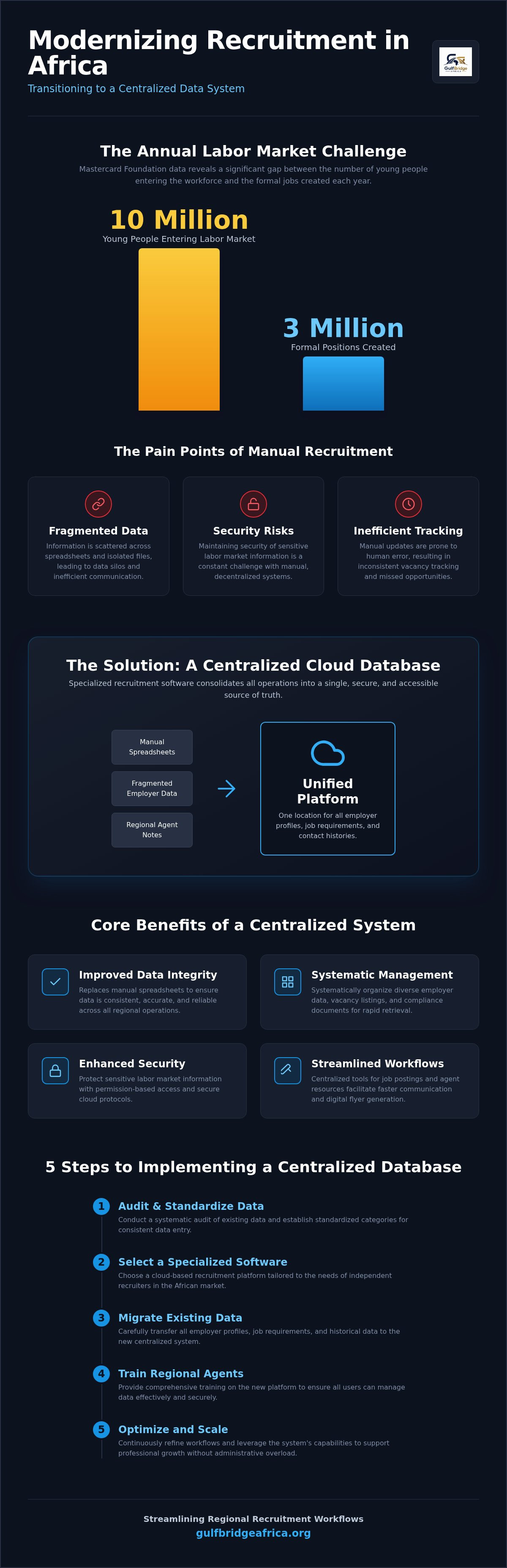
5 Steps to Implementing a Centralized Database
Implementing a centralized database requires a methodical approach to data organization. Recruiters first conduct a systematic audit of all existing employer and candidate records. This process identifies data inconsistencies and obsolete information that can compromise system utility. Defining organizational categories follows the audit to ensure all entries meet established administrative standards. Selecting recruitment software for independent recruiters in Africa that supports regional connectivity is the next operational requirement. Migrating legacy data into a cloud environment allows for real-time access across different geographical locations. Establishing a maintenance routine ensures that the database remains accurate and functional over long-term hiring cycles.
The implementation process follows a logical sequence to ensure data integrity. Recruiters should follow these five functional steps:
- Systematic Audit: Review all manual spreadsheets and digital files to identify valid employer records.
- Standardization: Establish naming conventions for industry sectors and regional locations.
- Platform Selection: Evaluate software based on cloud security and collaborative access features.
- Data Migration: Import cleaned records into the centralized system using standardized templates.
- Maintenance Routine: Schedule monthly data verification tasks to update job vacancy statuses and contact details.
Data Migration and Standardization Strategies
Cleaning and formatting data is essential for a successful system import. Recruiters must verify that all fields, such as employer contact details and job requirements, follow a unified structure. Standardizing these records prevents the creation of duplicate profiles in the new system. This structure supports efficient employer profile management across diverse industry sectors. Removing special characters and unifying date formats reduces technical errors during the upload phase. The migration phase represents a transition to operational clarity.
Training and Adoption for External Agents
Onboarding regional partners to the agent resource portal ensures consistent data usage across the network. Independent recruiters must set clear expectations for how agents interact with shared employer leads. Utilizing recruitment software for independent recruiters in Africa to track agent-driven recruitment progress provides oversight of regional activities. This collaborative framework reduces communication lag and improves the speed of vacancy fulfillment. Agents should be trained to use integrated tools like recruitment flyers to maintain brand consistency during campaigns. Systematic tracking allows for the evaluation of agent performance based on verifiable data entries. For those ready to centralize their operations, utilizing an employer data management platform provides the necessary framework for professional scaling.
GulfBridge Africa: Streamlining Regional Recruitment Workflows
GulfBridge Africa provides a cloud-based data management platform for professional recruitment. This recruitment software for independent recruiters in Africa centralizes employer information into a structured, searchable database. Users access the platform to manage job postings and agent resources from a single administrative location. The system provides the technical infrastructure required for systematic regional manpower management. It functions as a silent partner in the user's daily workflow. Operational logic ensures that all data entries remain consistent across different geographical regions. This centralized approach replaces the need for fragmented manual systems and decentralized spreadsheets.
Centralizing Your Recruitment Operations
The platform organizes employer data and agent resources within a unified interface. Solo recruiters use these tools to track job vacancy statuses and specific employer requirements systematically. Collaborative teams utilize the dedicated agent resource portal to share recruitment marketing assets and campaign data. Integrated tools for digital recruitment flyers allow for the rapid generation of professional marketing materials. Systematic tracking improves placement outcomes by providing real-time visibility into the entire recruitment cycle. Every action taken within the interface contributes to a verifiable audit trail. This structure reduces the administrative burden of manual data reconciliation. Users maintain oversight of all regional activities through a single, secure login.
Functional components of the centralized interface include:
- Employer Data Management: Categorizing company profiles by industry and regional urgency.
- Job Posting Service: Automating the distribution of vacancy listings to regional partners.
- Agent Resource Portal: Providing a shared environment for collaborative task management.
- Digital Asset Library: Storing and distributing standardized recruitment flyers.
Next Steps for Operational Efficiency
Accessing the GulfBridge portal allows for immediate regional workforce management. The platform acts as an unobtrusive framework for organizing professional tasks and data interactions. Integrating job vacancy listings into the management system ensures that all opportunities are tracked from entry to fulfillment. Users follow a modular workflow that moves from data entry to placement verification without unnecessary transitions. This approach provides the stability and systematic logic required for professional scaling. The system supports standardized employer profile management and real-time oversight of agent-driven activities. Utilizing a professional employer data management platform ensures that sensitive labor market data remains secure. Reliability is maintained through consistent system behavior and predictable data outcomes across the African regional market.
Future-Proofing Independent Recruitment Operations
Transitioning to a centralized database replaces manual error with systematic logic. Cloud-based accessibility ensures that employer records remain available across different regional hubs. This structural shift allows recruiters to maintain data integrity while managing multiple vacancy types. Selecting the right recruitment software for independent recruiters in Africa provides the necessary framework for professional scaling and regional connectivity. It allows for the orderly management of complex labor market data without increasing administrative overhead.
Systematic employer data management and an integrated agent resource portal allow for efficient coordination with regional partners. These tools facilitate the rapid distribution of recruitment flyers and the tracking of placement progress. Utilizing a structured platform ensures that sensitive labor market information remains secure and compliant with regional standards. The system functions as a silent partner, providing a methodical guide for your professional environment. Streamline your recruitment workflow with GulfBridge Africa to access cloud-based tools designed for regional efficiency. Establishing these structured processes ensures long-term operational reliability and administrative clarity in the African labor market.
Frequently Asked Questions
What is recruitment software for independent recruiters?
It's a digital tool designed to manage employer data, job postings, and candidate records. This software provides a structured database that replaces manual tracking methods. It allows solo agents to organize their professional workflow without the need for a large administrative team. The system functions as a central repository for all labor market information. It enables the user to track hiring cycles and maintain historical records of employer requirements.
How does a centralized system improve employer data management in Africa?
A centralized system improves data management by eliminating information silos across different regional hubs. It provides a single source of truth for employer profiles and vacancy statuses. This structure ensures that all data entries follow standardized administrative formats. It reduces the risk of data duplication and human error associated with manual spreadsheets. Systematic organization allows recruiters to retrieve specific employer requirements quickly during high-volume hiring periods.
Can independent recruiters share data securely with regional agents?
Yes, recruitment software for independent recruiters in Africa includes permission-based access for secure data sharing. Users can restrict visibility to specific employer leads or job postings based on agent roles. This collaborative framework ensures that sensitive labor market information remains protected during regional operations. The system maintains a verifiable audit trail of all data interactions. Secure cloud protocols prevent unauthorized access while allowing authorized agents to retrieve necessary recruitment marketing assets.
What are the essential features of a manpower agency management software?
Essential features include an employer data management platform, a job posting service, and an agent resource portal. The software must support the creation and distribution of digital recruitment flyers. It should provide systematic tracking of job vacancy statuses and candidate progress. Logical data organization and cloud-based accessibility are critical for regional connectivity. These features allow independent recruiters to maintain oversight of complex recruitment workflows from a single administrative interface.
Is cloud-based recruitment software suitable for solo users in Africa?
Cloud-based recruitment software for independent recruiters in Africa is highly suitable for solo users due to its mobility and scalability. It's highly suitable because it allows recruiters to access their database from any location with an internet connection. This flexibility supports the mobile nature of regional recruitment without requiring expensive physical infrastructure. The software provides a professional framework that grows with the user's business. It ensures that solo operators maintain organizational logic.
How do I migrate my existing spreadsheets to a centralized system?
Migration begins with a systematic audit of current spreadsheets to identify valid employer and candidate records. Cleaned data is then formatted to match the import templates of the centralized system. This process involves unifying date formats and removing special characters to prevent technical errors. Users upload the prepared files directly into the cloud environment. The system then organizes the imported data into standardized categories for immediate operational use.
Does recruitment software help with job vacancy listings in Africa?
Recruitment software automates the management and distribution of job vacancy listings across the region. It tracks the status of every opening from initial posting to final placement. The system ensures that all vacancy details remain consistent across different platforms and with regional agents. This automation reduces the time required for manual updates and improves communication speed. Integrated tools allow for the rapid creation of recruitment flyers to support vacancy fulfillment campaigns.
What is the benefit of an agent resource portal for independent recruiters?
An agent resource portal centralizes the distribution of recruitment marketing assets and job requirements. It provides a shared environment where regional agents can access the latest vacancy listings and branding materials. This portal reduces communication lag by eliminating the need for fragmented email chains. It allows independent recruiters to track agent activity and data contributions systematically. The portal ensures that all partners operate within a unified framework and use verified information.


