

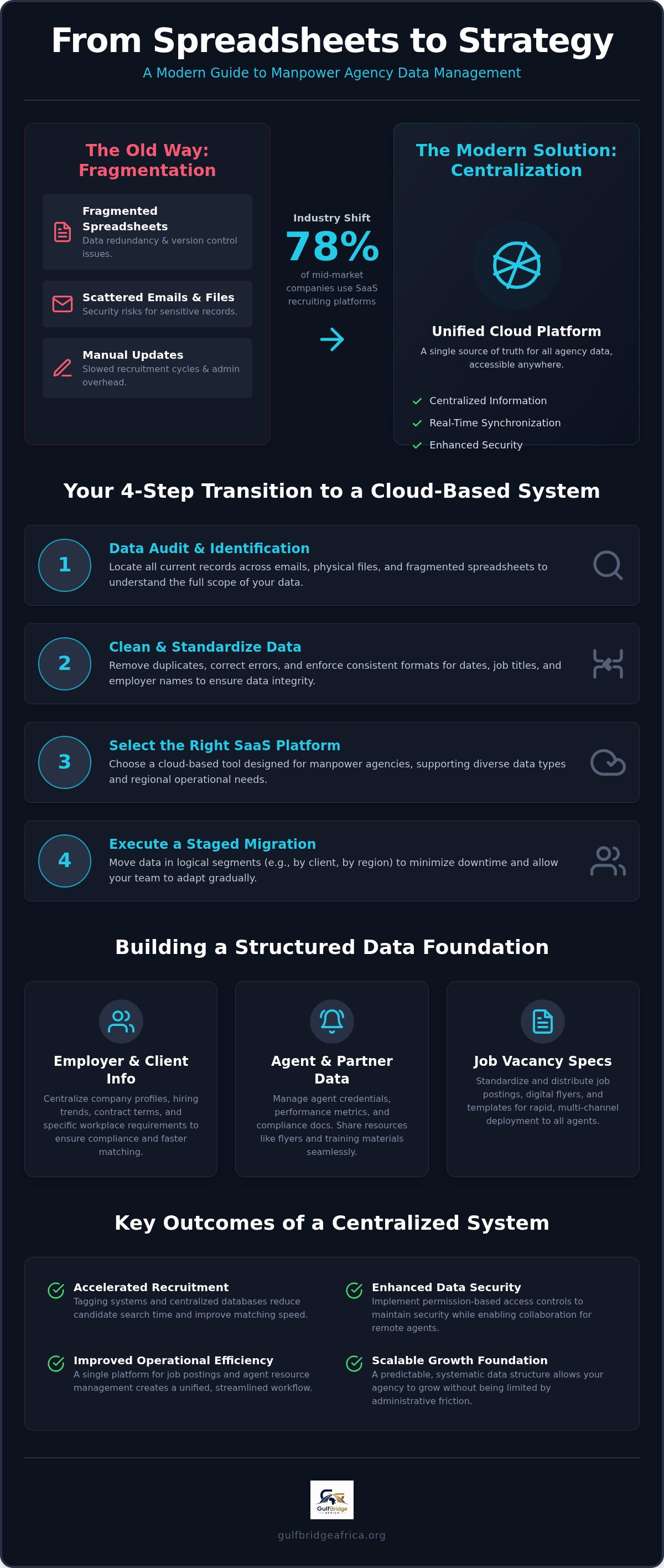
78% of mid-market companies now exclusively use SaaS recruiting platforms to manage their professional operations. Relying on fragmented spreadsheets to manage manpower agency data leads to redundancy and creates security risks for sensitive employer records. You likely experience difficulty sharing real-time job vacancy details with regional agents when using manual systems. This lack of synchronization slows recruitment cycles and increases administrative oversight. A systematic cloud approach addresses these operational gaps by centralizing all agency information in one location.
You recognize that maintaining multiple disconnected files is an inefficient method for data handling. This article outlines the operational steps to transition from fragmented spreadsheets to a centralized cloud-based system. You'll learn how to organize employer records, distribute job postings to agents, and implement secure collaborative access for remote teams. This guide provides a framework to establish a functional database that improves organizational efficiency and accelerates recruitment outcomes.
Key Takeaways
- Categorize agency information into employer records, agent credentials, and job vacancy specifications to establish a structured data foundation.
- Execute a systematic data audit and cleaning process to manage manpower agency data effectively during the transition to cloud systems.
- Utilize tagging systems and centralized employer databases to reduce search time and improve candidate matching speed.
- Implement permission-based access controls to maintain data security while facilitating collaborative workflows for remote agents.
- Centralize job postings and agent resource management through a SaaS platform to achieve a unified and scalable operational structure.
Identifying Core Manpower Agency Data Types
Manpower agency data consists of internal operational records and external partnership information. This data structure supports the entire recruitment process by providing a framework for coordination. To manage manpower agency data efficiently, you must categorize information into employer records, agent credentials, and job vacancy specifications. This classification serves as the foundational step in employer data management. Systematic identification prevents data loss and ensures that all team members access the same version of a record.
Recruitment marketing assets also represent a critical data category. Digital recruitment flyers and job posting templates are not just creative files; they're operational assets. Storing these within a centralized Employer Data Management Platform allows for rapid distribution across multiple channels. Properly structured data models allow agencies to manage manpower agency data with greater precision, reducing the time spent on administrative retrieval. Standardizing these data types creates a predictable workflow that facilitates scaling.
Employer and Client Information
Employer records track company profiles and historical hiring trends. You should document specific contract terms and the contact details for multiple hiring managers within one organization. This practice ensures continuity when personnel changes occur. Agencies must also record unique workplace requirements for Gulf-based and regional African employers. Detailed records of housing standards, transport provisions, and local labor laws help verify that job postings remain accurate and compliant. Tracking these details in a centralized database allows for faster matching of candidates to specific employer needs.
Agent and Partner Resource Data
An Agent Resource Portal maintains a registry of sub-agents and their specific recruitment performance metrics. Storing agent certifications and regional compliance documentation systematically reduces legal risks. This data category includes shared resources such as recruitment flyers and training materials. Organizing these partner resources allows your agency to monitor contributions and ensure that regional agents use approved branding. Managing these records in a central Job Posting Service facilitates real-time updates for all external partners simultaneously. This structured oversight ensures that agents have the necessary tools to fulfill vacancy requirements without constant manual intervention.
Transitioning to a Cloud-Based Recruitment Database
Transitioning from manual administrative systems to a cloud environment requires a structured four-step process. This shift isn't merely a transfer of files; it's a reorganization of how you manage manpower agency data. First, conduct a thorough data audit to identify all current storage locations. You must locate records hidden in email threads, physical paper files, and fragmented Excel sheets. This audit reveals the total volume of information you need to move. Implementing a systematic migration plan is the most effective way to manage manpower agency data without disrupting daily business operations.
The second step involves cleaning and standardizing data formats. Cloud systems rely on consistent input to provide accurate search results and analytics. You should standardize date formats, job titles, and employer naming conventions before the upload begins. This preparation allows your agency to adopt a data-driven approach to hiring, which transforms raw records into a strategic asset. Third, select a manpower agency management software in Africa that specifically supports regional operational requirements. Finally, execute a staged migration. Moving data in logical segments minimizes operational downtime and allows your team to adapt to the new interface without halting active recruitment.
Data Auditing and Standardization
Effective migration begins with the removal of duplicate records and outdated employer information. Redundant entries clutter the database and lead to communication errors with clients. You must verify the accuracy of active agent contact lists to ensure the resource portal remains functional. Standardizing naming conventions for job vacancy listings ensures that agents can filter opportunities quickly. Clean data provides the foundation for a reliable system that reduces administrative friction for your entire team.
Choosing a SaaS Management Platform
Evaluate cloud tools based on their ability to manage diverse data types within a single environment. A functional platform should integrate employer contracts, agent performance metrics, and recruitment marketing assets. Prioritize systems that offer offline-online synchronization. This capability is vital for maintaining productivity in regions with inconsistent internet access. Using a dedicated Employer Data Management Platform provides necessary administrative oversight. This structure ensures that team-based data entry remains organized and secure, preventing unauthorized access to sensitive employer records.
Organizing Records for Operational Efficiency
Implementing a centralized employer database reduces the time spent searching for specific job specifications. When you manage manpower agency data through a unified system, you'll eliminate the need to cross-reference multiple spreadsheets. This organization allows for the immediate retrieval of recruitment documentation from a single cloud location. Maintaining a historical log of all interactions with employers and agents provides a clear audit trail. This log ensures that every team member understands the current status of a partnership or vacancy without needing internal meetings. Systematic record-keeping prevents the loss of institutional knowledge when staff members depart.
Centralizing Employer Records
Creating a single source of truth for every client company prevents the formation of data silos. You should link every job vacancy directly to the corresponding employer profile within the system. This linkage ensures that specific contract terms and workplace requirements remain visible during the recruitment cycle. Tracking recruitment progress online allows you to provide instant updates to clients. This transparency reduces the volume of status-check emails and improves professional trust. Centralized records simplify the management of multiple hiring managers under a single corporate entity. This structure allows your team to manage manpower agency data with minimal administrative friction.
Effective data organization requires a robust tagging system. You can categorize candidates by specific skill sets and regional availability to facilitate rapid matching. Tagging allows for instant filtering across thousands of records, which is essential for meeting urgent employer demands. Storing these categorized records in a collaborative cloud environment ensures that regional agents can contribute to the database without creating duplicate entries. This systematic approach transforms a static list into a dynamic, searchable asset. This identification facilitates talent pool mapping in specific African regions for future deployments.
Managing Recruitment Marketing Assets
Recruitment marketing materials, such as digital flyers, require organized storage for easy agent access. You should maintain a shared library where sub-agents can download the latest promotional assets. Organizing templates for job postings ensures brand consistency across various portals and social media platforms. Managing the distribution of these materials through a central portal prevents the use of outdated or incorrect vacancy details. This structured distribution model ensures that all regional partners represent your agency's requirements accurately. It streamlines the workflow between your central office and regional recruiters by providing immediate access to approved resources.
Establishing Collaborative Data Workflows
Establishing collaborative workflows ensures that the head office and field agents operate from the same data set. You must set up permission-based access to protect sensitive employer data from unauthorized agents. This restriction ensures that recruiters only see the information relevant to their specific assignments and prevents internal data leaks. Establishing clear protocols for data entry maintains system integrity and prevents the creation of duplicate or conflicting records. These protocols provide a standardized framework for how team members should manage manpower agency data during high-volume recruitment cycles. Consistent data entry allows the system to generate accurate reports for stakeholders.
Real-time data sharing between head offices and field agents reduces communication delays and improves response times. You can use recruitment agency KPI tracking software to monitor partner contributions and identify high-performing agents. This systematic oversight allows you to allocate resources based on verified performance metrics rather than anecdotal reports. Centralizing this performance data ensures that your agency maintains a high standard of service across all regional operations. It provides a clear view of which partners are meeting their recruitment targets.
Agent Resource Portals
Providing agents with a dedicated login to an Agent Resource Portal allows them to access current job listings independently. This self-service model reduces the administrative burden on central office staff. Agents can upload candidate documentation directly into the centralized database, which ensures that all files are stored in the correct employer profile. Automating the notification process when new employer requirements are added ensures that agents can begin the recruitment process immediately. This automation eliminates the need for manual broadcast emails and ensures that every partner receives the same information simultaneously. Efficiently managing these portals is a core requirement to manage manpower agency data across dispersed teams.
Data Security and Compliance
Data security is a fundamental component of collaborative workflows. You should implement two-factor authentication for all users accessing the manpower database to prevent unauthorized entry. Ensure all data handling practices align with regional African privacy regulations, such as the Nigeria Data Protection Regulation (NDPR) or other local frameworks. Schedule regular data backups to the cloud to prevent data loss from hardware failure or local power outages. These outages are common operational risks that require automated mitigation strategies. A secure system protects your agency's reputation and maintains the confidentiality of sensitive employer records. To secure your recruitment operations, implement a professional Employer Data Management Platform today.
Scaling Your Agency with GulfBridge Africa
GulfBridge Africa provides a cloud-based SaaS platform to centralize manpower operations. Using this system allows you to manage manpower agency data within a single, unified environment. You can transition from fragmented local storage to a structured digital framework. This centralization ensures that all team members access the same operational records. Systematic data tracking provides the oversight necessary for scaling recruitment activities across multiple African regions. The platform functions as a silent partner that supports your agency's professional growth without introducing unnecessary administrative complexity. It's designed to bring order to the professional environment through systematic logic.
Functional Tools for Modern Agencies
The platform integrates several functional tools to organize employer data and track recruitment progress. You can use the Job Posting Service to manage vacancies and attract regional talent through a professional portal. This portal updates in real-time for all stakeholders, which reduces the need for manual status updates. Agencies can also utilize the platform to create and distribute digital Recruitment Flyers. Storing these marketing assets in a shared library ensures that your network of agents uses approved materials. Centralizing these assets in one place simplifies the distribution of job requirements to regional sub-agents. This Job Posting Service acts as a core data management feature by linking vacancies to specific employer profiles. This modular approach allows for rapid scanning of available resources and faster decision-making.
Operational Stability and Growth
Operational stability is achieved by automating repetitive data management tasks. Reducing administrative overhead allows your team to focus on fulfilling employer requirements rather than managing file versions. The Agent Resource Portal streamlines collaboration by providing partners with direct access to necessary documentation. Don't let fragmented files slow your expansion. Position your agency as a reliable partner through transparent, data-driven reporting generated by the system. These reports provide a clear view of recruitment cycles and partner performance. Utilizing a stable, cloud-based infrastructure allows you to manage manpower agency data securely as your volume of placements increases. This systematic approach ensures that growth does not compromise the quality of your data handling. A consistent and predictable rhythm in data handling helps you understand the primary purpose of each organizational step. It provides a framework for work that remains authoritative yet unobtrusive.
Establishing a Scalable Data Infrastructure
Transitioning from fragmented spreadsheets to a centralized cloud system is an essential step for operational efficiency. You've identified how to categorize information into employer records, agent credentials, and job specifications. Implementing these systematic steps allows your team to manage manpower agency data with precision and security. Standardizing your records and establishing collaborative workflows ensures that all partners operate from a single source of truth. This organization reduces administrative overhead and accelerates recruitment cycles across your regional network.
GulfBridge Africa provides the functional tools necessary to maintain this structure. The platform offers cloud-based employer data management and an integrated agent resource portal specifically designed for African manpower agencies. These features allow you to track performance and distribute job postings through a unified interface. It's a structured approach that creates a stable environment for long-term growth. You can streamline your agency operations with GulfBridge Africa to achieve professional reliability. Start organizing your agency's data today to ensure a more efficient recruitment process.
Frequently Asked Questions
What is the best way to manage manpower agency data for a small team?
The most efficient method is to adopt a centralized cloud platform. Small teams often experience fragmented workflows when information is stored in personal email accounts or local drives. Centralization ensures that every recruiter accesses the same employer profiles and agent registries. This structure reduces the time spent on administrative retrieval and prevents record loss during staff turnover. It provides a scalable framework that grows with your agency's volume.
How does cloud software improve recruitment data security?
Cloud systems utilize encrypted storage and permission-based access controls to secure sensitive information. These protocols prevent unauthorized users from viewing employer contracts or candidate documentation. Unlike manual spreadsheets, cloud software provides detailed audit logs to track every data interaction. Automated backups protect against local hardware failure and power outages. These security measures ensure that your agency complies with regional data protection standards and maintains operational stability.
Can I manage multiple types of employer data in one system?
Yes, a professional database allows for the integration of various data categories within a single interface. You can manage company profiles, contract terms, and specific workplace requirements under one employer record. Linking job vacancies to these records ensures that all stakeholders view the same details. This unified system eliminates the need for separate tracking files. It provides a clear overview of all client interactions and recruitment historical data.
What are the benefits of a centralized recruitment agent portal?
A centralized portal allows regional agents to access current job listings and marketing assets independently. This self-service model reduces the administrative burden on the central office. Agents can upload documentation directly into the system, which ensures files are correctly categorized. It facilitates real-time communication and ensures that all partners receive vacancy updates simultaneously. This coordination improves the speed of candidate sourcing and maintains brand consistency across your agent network.
How do I transition from Excel to a cloud-based manpower database?
Transitioning involves a systematic four-step process. First, conduct a data audit to identify all active files. Second, clean and standardize your records to ensure they are compatible with the new system. Third, select a platform designed for regional workflows. Finally, execute a staged migration to manage manpower agency data without interrupting ongoing recruitment. This approach ensures that your data remains accurate and accessible throughout the transition period.
Is it possible to track recruitment progress online for remote agents?
Yes, cloud-based systems enable real-time tracking of recruitment activities for dispersed teams. You can monitor candidate uploads and status changes as they occur in the field. This visibility allows the head office to evaluate progress without requesting manual reports. Remote agents can update records from any location, ensuring the central database remains current. This transparency facilitates better coordination between regional offices and improves the overall efficiency of the recruitment workflow.
How does better data management reduce recruitment cycle times?
Better data organization reduces the time spent on administrative tasks and information retrieval. Searchable databases allow recruiters to match candidates to job specifications faster. Automated notifications ensure that agents begin sourcing talent as soon as a vacancy is posted. Eliminating manual data entry errors prevents delays in candidate processing. By reducing these operational bottlenecks, your agency can fulfill employer requirements more quickly and increase the total volume of placements.
What security features should I look for in a manpower management system?
Essential security features include two-factor authentication and role-based access permissions. These tools help you manage manpower agency data while protecting sensitive employer records from unauthorized access. The system must provide automated data encryption and regular cloud backups to prevent information loss. Look for platforms that offer audit trails to monitor all user activity. These features ensure compliance with regional data privacy laws and protect your agency from potential data breaches.


