

Effective recruitment oversight is primarily a data management challenge. Many African agencies currently manage fragmented employer records and manual vacancy lists across multiple regional offices. This lack of centralized data often results in inconsistent agent performance and lost operational hours. Implementing a dedicated manpower recruitment tracking system solves these logistical gaps by consolidating administrative tasks into a single interface. It transitions your agency from reactive manual tracking to proactive systematic management.
You require a structured method to evaluate software that fits your specific regional workflow. This guide provides a functional framework for selecting and deploying recruitment tracking tools. We will examine the essential components of a centralized employer database and the requirements for standardized agent oversight. You will learn how to transition away from manual spreadsheets toward a modular system that tracks job vacancies across different territories. This checklist ensures your software choice supports clear operational visibility and team coordination. The focus remains on utility and the logic of professional data handling.
Key Takeaways
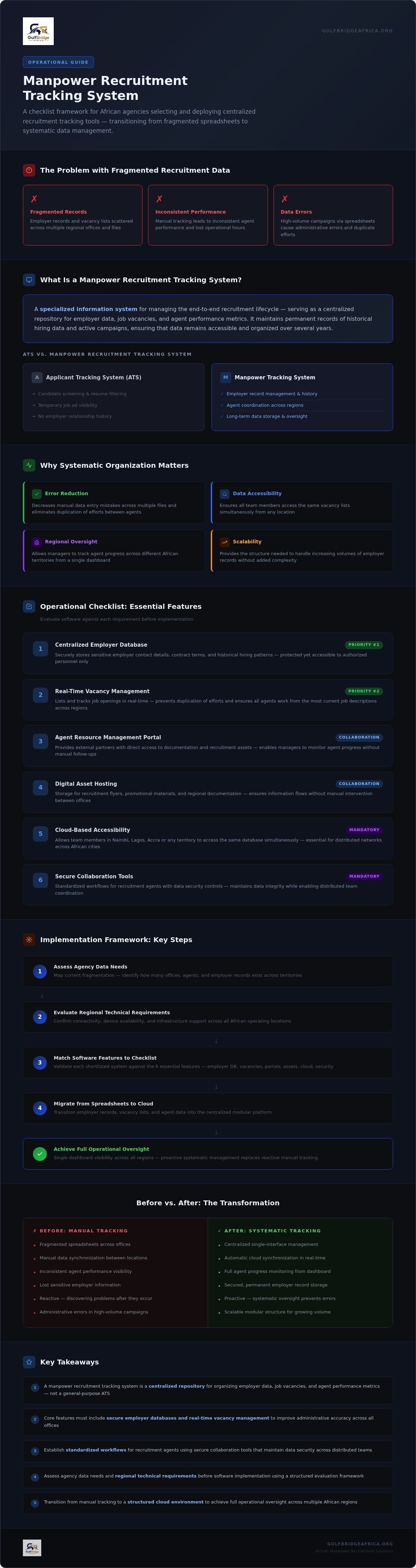
- Define the function of a manpower recruitment tracking system as a centralized repository for organizing employer data and job vacancies.
- Identify core features including secure employer databases and real-time vacancy management to improve administrative accuracy.
- Establish standardized workflows for recruitment agents using secure collaboration tools that maintain data security.
- Utilize a systematic framework to assess agency data needs and regional technical requirements before software implementation.
- Transition from manual tracking to a structured cloud environment to achieve operational oversight across multiple regions.
Defining the Manpower Recruitment Tracking System
A manpower recruitment tracking system is a specialized information system for managing the end-to-end recruitment lifecycle. It serves as a centralized repository for employer data, job vacancies, and agent performance metrics. Agencies use this software to maintain a permanent record of historical hiring data and active campaigns. This system is an operational tool for data organization and process oversight. Standard job boards offer temporary visibility for job ads but lack long-term management capabilities. They don't store employer relationship history or agent interaction logs. A tracking system ensures that agency data remains accessible and organized over several years.
Core Differences Between ATS and Manpower Tracking
General Applicant Tracking Systems (ATS) prioritize candidate screening and resume filtering. A manpower recruitment tracking system focuses on employer record management and the coordination of recruitment agent resources. It manages diverse assets such as digital recruitment flyers and regional job listings. This distinction is vital for agencies that rely on a network of external agents. The system provides collaborative tools for distributed teams. It allows managers to monitor agent progress without manual follow-ups. This software architecture supports the specific needs of the African recruitment market where regional coordination is a primary requirement.
Why Systematic Organization is Essential for Agencies
High-volume recruitment campaigns often suffer from administrative errors when managed through spreadsheets. A systematic approach reduces data fragmentation and prevents the loss of sensitive employer information. Centralized data handling improves the speed of information sharing between recruitment agents and management. It provides a functional framework for agencies operating in different African territories. This organization supports several key operational goals:
- Error Reduction: Decreases manual data entry mistakes across multiple files.
- Data Accessibility: Ensures all team members access the same vacancy lists.
- Regional Oversight: Allows managers to track agent progress across different locations.
- Scalability: Provides the structure needed to handle an increasing volume of employer records.
Managers track job vacancies across multiple regions using a single dashboard. This oversight ensures that all team members work from the same dataset. Systematic organization provides the stability required for complex, multi-region operations. It eliminates the need for manual data synchronization across disparate office locations.
Operational Checklist: Essential Features for Data Management
A functional manpower recruitment tracking system serves as the technical foundation for agency operations. It replaces fragmented spreadsheets with a structured environment designed for high-volume data handling. Agencies must evaluate software based on its ability to centralize core administrative functions. This systematic approach ensures that data remains the primary asset of the organization rather than a source of confusion.
Securely storing sensitive employer information is the primary requirement of a centralized employer database. This feature ensures that contact details, contract terms, and historical hiring patterns remain protected yet accessible to authorized personnel. Effective job vacancy management tools allow teams to list and track openings in real-time. This visibility prevents the duplication of efforts and ensures that all agents work from the most current job descriptions. Without these tools, agencies risk miscommunicating vacancy details to their regional partners.
Agencies also require an agent resource management portal. This module provides external partners with direct access to necessary documentation and recruitment assets. Digital asset hosting further supports this by providing storage for recruitment flyers and promotional materials. These features work together to create a unified operational environment where information flows without manual intervention.
Data Organization and Accessibility
Cloud-based accessibility is a mandatory requirement for agencies operating across different African cities. It allows team members in Nairobi, Lagos, or Accra to access the same database simultaneously. This synchronization is essential for maintaining accurate records across a distributed network. You can learn more about how to manage manpower agency data through systematic cloud organization.
Consistency across employer records depends on structured data entry fields. A professional system uses standardized forms to capture information, which simplifies later retrieval. Advanced search and filter functions enable staff to locate specific recruitment data within seconds. This efficiency reduces the time spent on administrative searches and allows more focus on operational oversight. The adoption of a comprehensive manpower recruitment tracking system ensures that all regional offices maintain operational parity.
Recruitment Marketing and Asset Management
Managing recruitment marketing requires the integration of digital flyers into the standard workflow. The system should host these assets centrally so that agents don't have to request files manually. Centralized storage for agent-facing resources ensures that every team member uses the latest approved documentation. Using a dedicated employer data management platform facilitates this level of coordination without the need for constant email chains.
Modern systems support multiple data types to accommodate diverse workforce requirements. Whether managing technical certifications or basic identification documents, the software must provide flexible storage options. This capability ensures that the agency can scale its operations without outgrowing its technical infrastructure. The systematic organization of these assets directly impacts the speed and accuracy of recruitment campaigns.
Evaluating Collaborative Tools for Agency-Agent Workflows
Collaboration is a key requirement for agencies managing external recruitment agents. The system should allow for secure data sharing without compromising sensitive employer information. A professional manpower recruitment tracking system must support multi-user access with tiered permissions. This technical structure ensures that agents only see data relevant to their assigned tasks. Administrators maintain control over the master database while providing agents with specific operational tools. Tiered access prevents unauthorized data exports and protects the agency's primary intellectual property. This segregation of data is essential for maintaining privacy standards when working with third-party contractors. The system functions as a gatekeeper for sensitive employer details, creating a secure environment for high-volume data handling across multiple teams.
The Agent Resource Portal
The portal provides agents with a single source of truth for job vacancies. Automated data updates reduce communication bottlenecks between the central office and field agents. This synchronization ensures that agents don't promote expired or filled positions. When a job status changes in the central database, the portal reflects this change immediately for all connected agents. This real-time update capability is critical for agencies managing fast-moving labor markets. The system tracks agent contributions to specific recruitment campaigns for better accountability. Centralized management of these records allows for objective evaluation of agent output. You can find detailed methods on performance management in our guide on recruitment agency KPI tracking software. This approach replaces manual check-ins with real-time data visibility.
Team Coordination and Task Management
Effective recruitment requires tools for organizing and sharing work within a recruitment team. Systematic oversight of recruitment progress across different departments prevents overlapping tasks. Managers use a declarative format for assigning tasks and tracking completion status. This structure allows for rapid scanning of project health and team capacity. The platform serves as a silent partner in the team's daily workflow. It provides the necessary framework for task management without demanding constant attention. Team members update their progress directly within the system to maintain a live record of all recruitment activities. This eliminates the need for separate status meetings or redundant email updates. The workflow mirrors the logic of a software interface, prioritizing immediate utility and clear organizational outcomes.
Implementation Framework: Selecting the Right System in Africa
Selecting a manpower recruitment tracking system requires a methodical evaluation of agency requirements. The process begins with identifying the primary data management needs of your specific organization. Agencies managing high-volume labor require different data structures than those focusing on executive placements. Step two involves assessing cloud accessibility and internet requirements for regional teams. The software must maintain performance across varied connectivity environments to prevent operational downtime. Step three requires an evaluation of the platform’s ability to handle manpower-specific data like recruitment flyers and employer contracts. Finally, verify the system’s capacity for collaborative workflows and agent management. This structured selection process ensures the chosen tool aligns with the agency's daily operational reality.
Regional Considerations for African Agencies
Agencies operating in Africa must prioritize lean, modular software. These systems perform consistently in varied connectivity environments where bandwidth may be limited. Ensure the system supports the regional scope of your recruitment operations across multiple cities or countries. A centralized cloud environment allows for the synchronization of data between remote offices without manual file transfers. For a broader overview of operational tools, consult our manpower agency management software Africa guide. This regional focus prevents the adoption of systems designed for markets with different technical infrastructures. The goal is to maintain a stable connection to the master database at all times.
Security and Compliance Checklist
Data protection is a critical component of professional recruitment management. Agencies must verify cloud storage protocols for protecting employer data and sensitive candidate records. Check for recordkeeping tools that support regional regulatory compliance and audit requirements. The platform should provide a neutral, professional environment for data handling that minimizes human error. Systematic recordkeeping ensures that all interactions are logged and searchable for future reference. This level of oversight protects the agency from data loss and legal inconsistencies. Implementing a secure employer data management platform provides the necessary infrastructure for compliant operations. Every data entry must follow a standardized protocol to ensure long-term integrity and accessibility.
GulfBridge Africa: A System for Regional Data Management
GulfBridge Africa provides a functional platform designed for the systematic organization of recruitment data. This manpower recruitment tracking system enables agencies to track job vacancies and manage employer records in a centralized cloud environment. The platform functions as a stable framework for daily operations. It prioritizes data integrity and accessibility for regional teams. Users can utilize specialized tools for agent resources and recruitment flyer management. These features ensure that the agency maintains a consistent professional presence across all recruitment channels. The system serves as a silent partner in the user's workflow, providing the necessary tools for professional data handling.
Streamlined Data Management Tools
The platform offers centralized data management for employers and recruitment agents. It supports multiple data types within a single operational interface to reduce software fragmentation. This includes the storage of technical specifications, job descriptions, and agent performance logs. Information delivery follows a modular pattern to facilitate rapid scanning and decision-making. This fast-paced rhythm allows managers to move between tasks without navigating complex menus. For additional guidance on protecting sensitive data, consult our employer data management system guide. The focus remains on the utility of the platform as a data handling tool rather than the personality of the brand itself.
Supporting Team and Solo Users
The flexible platform architecture accommodates different agency sizes and structures. It provides tools for organizing, tracking, and sharing recruitment work in a unified space. Solo operators use the system to maintain professional recordkeeping standards without additional administrative staff. Large teams benefit from the collaborative features that allow for task assignment and progress monitoring. The professional register focuses on operational outcomes and systematic management. This creates an atmosphere of professional reliability where the focus remains entirely on task completion. Every function within the system supports the goal of clear operational oversight. Users can track the progress of specific recruitment flyers or agent contributions from a single dashboard. This systematic approach ensures that all work remains visible and organized across the entire agency network.
Standardizing Your Agency Data Management
Effective agency management depends on the transition from fragmented files to a structured manpower recruitment tracking system. This guide established that operational oversight requires a centralized employer database and a dedicated agent resource portal. Agencies must prioritize modular, cloud-based tools to ensure data consistency across different regional offices. Systematic organization reduces administrative errors and facilitates the secure sharing of job vacancies. The implementation of a functional framework allows your team to focus on task completion rather than data retrieval.
GulfBridge Africa provides the technical infrastructure required for these professional workflows. The platform features cloud-based employer data management and specialized tools for recruitment flyers. It's designed specifically for African recruitment workflows to support distributed teams and remote coordination. This system functions as a silent, reliable partner in your daily administrative tasks. You can improve your operational visibility and team coordination by adopting a systematic approach to data handling. Maintaining organized agency records supports long-term operational stability and growth.
Access the GulfBridge Africa Platform for Systematic Data Management
Frequently Asked Questions
What is the primary function of a manpower recruitment tracking system?
The system serves as a centralized information system for managing the end-to-end recruitment lifecycle. It organizes employer data, job vacancies, and agent performance metrics within a single interface. It replaces manual spreadsheets with a structured database. This centralization ensures that all team members access the same operational data. It provides the necessary framework for systematic oversight and professional recordkeeping across multiple recruitment campaigns.
How does a cloud-based system improve recruitment for African agencies?
Cloud-based accessibility enables remote teams to synchronize data across different regional offices in real-time. It eliminates the need for manual file transfers between cities. A cloud-based manpower recruitment tracking system ensures that job vacancy lists remain current for all connected users. This technical infrastructure supports consistent operations despite geographical distances. It allows managers to maintain oversight of distributed agents through a secure, centralized web portal.
Can I manage multiple recruitment agents within one platform?
Yes, the system includes a specialized agent resource portal for managing external partners. Administrators assign tasks and track the progress of multiple agents from a single dashboard. The platform supports tiered permissions to ensure that agents only access data relevant to their specific assignments. This structure prevents unauthorized data exports and protects sensitive employer records. It establishes a standardized workflow for the entire agent network, improving overall administrative efficiency.
What features are essential for managing employer data securely?
Essential features include a centralized employer database with tiered access controls and encrypted cloud storage. The system must provide structured data entry fields to ensure record consistency across the organization. Audit logs and recordkeeping tools are necessary for tracking data modifications and maintaining regulatory compliance. These features protect intellectual property by preventing unauthorized access to sensitive contact details and contract terms. Secure data handling remains the primary focus of the platform architecture.
How do recruitment flyers integrate with a tracking system?
The system provides specialized tools for digital asset hosting and distribution. Users upload recruitment flyers to a central repository where they are linked to specific job vacancies. Agents access these approved promotional materials directly through the resource portal. This integration ensures that all marketing efforts use current, authorized documentation. It eliminates the need for sending large file attachments via email and maintains a consistent professional appearance for all campaigns.
Is a recruitment tracking system suitable for small agencies?
Small agencies benefit from the systematic organization and professional recordkeeping standards the platform provides. The flexible architecture allows solo users to manage employer data and job postings without a large administrative staff. It establishes a scalable foundation that supports future growth into multiple regions. Small teams use the system to maintain a professional register and track agent contributions efficiently. This structure ensures that administrative tasks don't overwhelm the agency's core recruitment activities.
What is the difference between a job board and a recruitment tracking system?
A job board is a temporary visibility tool for posting advertisements, while a tracking system is a long-term data management platform. Job boards lack the capability to store historical employer relationship data or manage external agent workflows. A manpower recruitment tracking system functions as a permanent repository for all operational assets and performance metrics. It provides the framework for ongoing process oversight and team coordination that a simple job board cannot offer.
How does the system support regional collaboration in Africa?
The platform facilitates regional collaboration by providing a single source of truth for distributed teams. Modular software design ensures that the system performs well in varied connectivity environments across different African territories. It allows for the rapid sharing of recruitment flyers and job data between central management and regional agents. This synchronization ensures that all offices work from the same dataset. It provides the stability required for managing complex, multi-country recruitment operations.


