

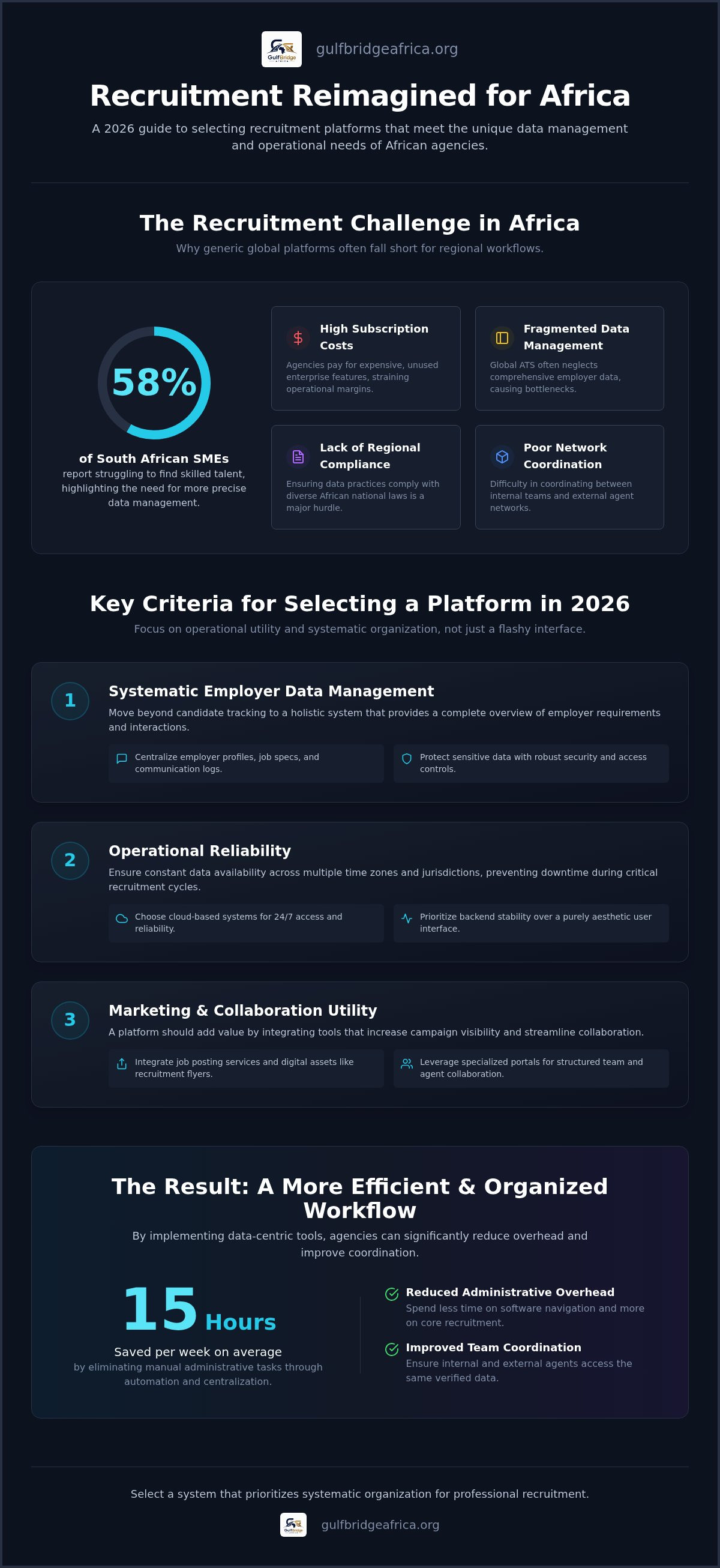
58% of South African SMEs report struggling to find skilled talent. Many agencies attempt to solve this by using high-cost global platforms. These systems often include expensive features that remain unused in local workflows. Finding Workable alternatives for recruitment requires a focus on operational utility rather than marketing promises. You likely find that managing complex employer data across different regional jurisdictions is a primary bottleneck.
It's clear that high subscription costs shouldn't be the price of basic organization. This guide identifies the most efficient recruitment platforms for African agencies by comparing operational features and data management capabilities. We focus on tools that provide a centralized database for systematic employer and candidate management. You'll learn how to lower operational overhead through targeted tools and improve coordination between internal teams and external agent networks. This overview provides a structured framework for selecting a system that prioritizes task management and systematic organization.
Key Takeaways
- Assess the operational efficiency of current systems to determine when a generic ATS no longer meets the data management requirements of African regional jurisdictions.
- Compare Workable alternatives for recruitment by focusing on their capacity for centralized data handling and systematic oversight of employer records.
- Analyze the functional utility of global platforms like JazzHR and BreezyHR for specific tasks such as automation and flexible feature management for small agencies.
- Reduce administrative overhead by integrating systematic data organization tools and utilizing digital recruitment flyers to expand reach across the African continent.
- Leverage specialized portals to facilitate structured collaboration between internal recruitment teams and external agent networks.
Why African Agencies are Evaluating Workable Alternatives
African agencies are reassessing their reliance on global recruitment software. A standard Applicant Tracking System (ATS) often fails to address specific regional requirements. These systems focus primarily on the candidate pipeline but neglect comprehensive employer data management. Many firms now evaluate Workable alternatives for recruitment to find tools that offer better functional alignment. This shift from simple tracking to systematic data organization improves overall operational efficiency.
High subscription costs also influence the search for Workable alternatives for recruitment. Many agencies pay for enterprise features that remain unused in local workflows. This creates an unnecessary financial burden on agency margins. In 2026, the demand for cost-effective, high-utility tools is increasing. Data sovereignty is another vital factor. Agencies must ensure that data management practices comply with specific African national laws. A localized approach to data handling provides the stability needed for professional recruitment operations.
The Shift Toward Modular Recruitment Tools
Recruitment teams are moving away from bloated, all-in-one platforms. These systems often lack the flexibility required for specialized tasks. Utilitarian tools that prioritize clear data structures are now the preferred choice. Modular systems allow agencies to implement only the functions they need. This reduces administrative overhead and improves systematic oversight. A focused toolset ensures that teams spend less time on software navigation and more time on task completion. This approach creates a structured environment for professional data handling.
Regional Challenges in African Recruitment Workflows
Managing fragmented employer data across diverse African markets is a complex task. 58% of South African SMEs report struggling to find skilled talent, which necessitates more precise data management. Agencies face challenges related to data accessibility and regional connectivity. Transitioning to a recruitment agency software Africa provides a solution tailored to these specific conditions. These platforms ensure that data remains organized and accessible through cloud-based infrastructure. Systematic data management is essential for coordinating activities between internal recruiters and external agents. This level of organization supports a reliable and professional workflow across the continent.
Key Criteria for Selecting a Recruitment Platform in 2026
Selecting a platform requires a shift in priorities. Agencies often prioritize user interface over operational stability. In 2026, the focus must move toward backend systematic organization. Workable alternatives for recruitment should provide a centralized database. This database must manage multiple data types in one location. This includes employer profiles, job specifications, and historical communication logs. Centralization reduces the time spent searching for information across fragmented systems. It ensures that every team member accesses the same verified data. This structure is essential for maintaining professional oversight.
Operational reliability is a non-negotiable requirement. African agencies operate across multiple time zones and jurisdictions. A cloud-based system ensures data availability at all times. This prevents downtime during critical recruitment cycles. Marketing utility also adds value. A platform should integrate job posting services and digital recruitment assets. These assets, such as recruitment flyers, increase the visibility of campaigns. Agencies that utilize these features report more consistent candidate flow. Integrated systems can save an average of 15 hours per week on administrative tasks. This time is better spent on core recruitment activities.
Systematic Employer Data Management
An efficient employer data management system tracks every interaction. It records historical data to provide a complete overview of employer requirements. This systematic tracking prevents the loss of critical information during staff transitions. Security is also a primary concern. Access controls must protect sensitive employer and candidate information. Systematic organization ensures that data remains secure and organized. You can explore a structured data management platform to streamline these administrative tasks. This approach ensures that your data remains a reliable asset for the agency.
Workflow Coordination and Team Oversight
Coordination tools allow teams to track progress on recruitment campaigns. These features provide a clear view of task status and agent performance. Shared resources reduce redundant administrative work. When teams use standardized documentation, the agency output remains consistent. This consistency builds professional trust with employers. Oversight tools help managers identify bottlenecks in the recruitment process. Managers can then reallocate resources to ensure timely completion of tasks. Standardized workflows ensure that every agent follows the same logic. This creates a predictable and efficient environment for large-scale recruitment operations.
Comparing Top Global Alternatives for African Teams
Many agencies evaluate Workable alternatives for recruitment to align software capabilities with specific team sizes. JazzHR provides a flexible structure for small teams. It allows for the selection of specific add-on features rather than a fixed enterprise bundle. This modular approach supports agencies with fluctuating recruitment volumes. It ensures that the software cost remains proportional to the actual utility. Agencies can scale their toolset as their employer database grows without committing to unnecessary enterprise layers.
BreezyHR offers high automation for repetitive hiring tasks. This is particularly useful for blue-collar or frontline roles, which account for 70% of hires made by SMEs in South Africa. Automated candidate screening and scheduling reduce the time spent on manual administration. However, global tools often lack integration with African payment gateways. This creates friction in billing and operational management. Agencies must also verify if these platforms comply with local data norms and regional labor regulations before implementation.
Bullhorn serves as a robust option for large-scale operations but introduces significant complexity. Many African manpower agencies find the interface and configuration requirements excessive for their daily workflows. The high cost of maintenance often outweighs the functional benefits for regional operations. A system that's too complex often results in low team adoption and fragmented data entry. Clear, direct interfaces are more effective for maintaining systematic organization across distributed networks.
Bullhorn vs. Regional Specialized Platforms
Comparing Bullhorn alternatives for Africa helps identify tools with lower operational costs. Global brand recognition doesn't always translate to local functional utility. Purpose-built databases often outperform generic platforms in regional data handling. These lean systems prioritize speed and systematic organization over decorative features. Regional agencies often prefer these purpose-built tools because they mirror the logic of local recruitment workflows. This focus on utility ensures that every feature serves a specific administrative purpose.
Scalability and Data Accessibility
Cloud-based systems are necessary for managing high volumes of workforce data. Scalability depends on the speed of data retrieval and the reliability of server infrastructure. Distributed recruitment teams require an onboarding process that's straightforward and logical. Regional systems often provide faster access because they align with local connectivity realities. This ensures that agents can retrieve employer data without latency issues during active recruitment campaigns. Systematic data management remains the core requirement for any platform supporting a growing agency network.
Optimizing Recruitment Workflows with Data-Centric Tools
Administrative bottlenecks often stem from fragmented data storage. Systematic data organization eliminates these delays by providing a single source of truth. Workable alternatives for recruitment must prioritize this structural clarity to improve agency throughput. Utilizing digital recruitment flyers is a practical method to enhance campaign visibility. These flyers allow agents to disseminate job details across various channels without losing brand consistency. This systematic approach ensures that recruitment campaigns reach a broader African audience quickly.
The transition from job posting to candidate data collection must be seamless. A functional manpower agency management software Africa automates this flow. It captures candidate information and organizes it according to specific employer requirements. This automation reduces the time agents spend on repetitive data entry. It allows teams to focus on verifying candidate qualifications. Systematic oversight is maintained through every step of the recruitment lifecycle.
Enhancing Employer-Agent Collaboration
Agent portals facilitate structured collaboration between internal teams and external networks. These portals provide agents with direct access to job posting services and recruitment assets. Centralized task management reduces the communication lag often found in distributed networks. Agents can track their progress against specific recruitment targets in real-time. This level of transparency ensures that all parties remain aligned with employer expectations. Providing agents with standardized tools improves the quality of candidate sourcing. It creates a reliable framework for large-scale recruitment operations across multiple regions.
Data-Driven Decision Making
Generating reports on recruitment campaign performance is essential for operational oversight. These reports identify the most effective job posting channels for specific roles. Tracking these metrics allows agencies to allocate their marketing budget more efficiently. Maintaining a clean and searchable employer database ensures long-term utility. This database serves as a historical record of employer interactions and job requirements. Systematic data handling prevents information loss and supports informed decision-making. Implement a systematic data management platform to standardize your agency workflows and improve coordination with external agents.
Implementing GulfBridge Africa as a Functional Workable Alternative
GulfBridge Africa operates as a structured choice among Workable alternatives for recruitment by prioritizing data infrastructure over decorative features. The Employer Data Management Platform provides a systematic environment for tracking employer records and historical interactions. This centralization ensures that all administrative data remains accessible and organized. Agencies utilize the Job Posting Service to reach a broader African audience through verified channels. This service streamlines the initial phase of the recruitment lifecycle by providing a consistent framework for vacancy distribution.
The Agent Resource Portal facilitates improved team coordination for agencies managing distributed networks. This portal allows managers to share recruitment flyers and other digital assets directly with agents. Centralizing these resources ensures that all external agents use standardized information during candidate sourcing. This consistency reduces administrative errors and improves the speed of candidate data collection. Systematic oversight is maintained through a cloud-based infrastructure that ensures data availability across the African region. These tools work together to create a reliable operational environment for professional recruitment agencies.
A Utilitarian Approach to Recruitment Management
A neutral and functional platform improves agency focus by removing unnecessary software complexities. GulfBridge Africa supports both solo recruitment professionals and large agency teams through a scalable data structure. The cloud-based system is tailored for the African region, ensuring reliable access regardless of local infrastructure variations. This utilitarian focus allows users to concentrate on task management and systematic organization. By providing a stable framework for data handling, the platform acts as a silent partner in the agency's daily workflow. This approach appeals to users who value professional oversight and streamlined processes.
Getting Started with GulfBridge Africa
Implementing a new system requires a methodical transition plan. The first step involves migrating existing employer data to the centralized platform to ensure historical continuity. Once the data is organized, agencies can set up their first recruitment campaign using the integrated job posting tools. This process includes generating recruitment flyers to standardize candidate-facing communications. Standardizing these workflows is essential for meeting 2026 operational goals and maintaining a competitive edge. This structured onboarding ensures that teams can utilize the full utility of the platform from the first day of implementation. Systematic data management remains the foundation for long-term agency growth and coordination.
Standardizing Your Recruitment Infrastructure for 2026
African agencies require a shift from candidate tracking to systematic data organization. This guide identified how evaluating Workable alternatives for recruitment leads to lower operational overhead. Selecting a system that prioritizes employer data management ensures long-term stability. Cloud-based accessibility remains a core requirement for distributed teams across the region. These tools provide the necessary framework for professional data handling.
Coordination between internal teams and external agents depends on a centralized resource portal. Using targeted recruitment tools like digital flyers improves campaign visibility without increasing complexity. GulfBridge Africa provides these integrated tools specifically for the African recruitment market. You can Access the GulfBridge Africa Platform for Systematic Recruitment Management to organize your workflows. This platform ensures data accessibility and improved team coordination through its specialized agent portal. Establishing a structured data environment prepares your agency for future growth. Systematic logic brings order to professional recruitment.
Frequently Asked Questions
What are the main reasons to switch from Workable to a regional alternative?
The primary reasons include high subscription costs for unused features and the need for regional data management. Workable alternatives for recruitment provide better functional utility for African workflows by focusing on local data sovereignty and systematic employer management. Many generic platforms lack the specific coordination tools required for distributed agent networks. Switching to a regional system ensures that your software logic mirrors the reality of local recruitment tasks.
Is a cloud-based recruitment database secure for sensitive employer data?
Professional cloud-based systems use encrypted infrastructure to protect sensitive employer and candidate information. GulfBridge Africa provides a secure environment for organizing multiple employer data types through its systematic management tools. Access controls ensure that only authorized personnel can retrieve specific records. This structure prevents data loss and ensures compliance with regional data protection standards. Reliable cloud access maintains 24/7 data availability for recruitment teams operating across different time zones.
How does GulfBridge Africa help manage multiple recruitment agents?
The Agent Resource Portal centralizes coordination by providing a shared space for job postings and recruitment flyers. Managers use this portal to track agent progress and distribute standardized recruitment assets to their network. This centralized approach reduces communication lag and ensures all agents follow the same operational logic. It also simplifies the process of monitoring agent performance across multiple campaigns. Collaborative tools are essential for maintaining professional oversight in agent-heavy models.
Can I use digital recruitment flyers for social media campaigns?
Digital recruitment flyers are designed for multi-channel distribution across various social media platforms. These assets ensure that job details remain consistent when shared by different agents or internal team members. Agencies use these flyers to increase campaign visibility and reach a broader African audience quickly. This systematic approach to marketing prevents the dissemination of incorrect job information. It also provides agents with a professional template for candidate sourcing activities that aligns with agency standards.
Does the platform support both small teams and large recruitment agencies?
The platform supports both solo recruitment professionals and large agency teams through a scalable data structure. Many firms consider these Workable alternatives for recruitment when they require a scalable system. Small agencies use the tools to manage basic employer records and job postings. Large organizations utilize the Agent Resource Portal to coordinate complex workflows. Cloud-based accessibility ensures that every user has reliable access to the centralized database regardless of their physical location.
How does an employer data management system differ from a standard ATS?
A standard ATS focuses primarily on tracking candidates through a recruitment pipeline. An employer data management system prioritizes the systematic organization of employer profiles, job specifications, and historical communication logs. This approach provides a comprehensive record for agencies managing long-term employer relationships. It ensures that critical employer information is not lost during staff transitions. Systematic data handling provides a more stable foundation for managing complex recruitment requirements across multiple jurisdictions and diverse industries.
What features are most important for manpower agencies operating in Africa?
Manpower agencies require cloud accessibility for distributed networks and systematic data organization for various employer types. Important features include integrated job posting services and collaborative portals for managing external agents. These tools support operational efficiency in regions with fragmented labor markets and varying connectivity levels. Agencies also benefit from digital recruitment flyers that standardize vacancy information. These functional tools prioritize task completion and systematic oversight over decorative software features that provide limited utility.
Is there support for tracking job vacancy progress online?
The platform includes specific tools for tracking the progress of every job vacancy online. Users can monitor recruitment campaign performance and view the status of candidate data collection in real-time. This level of operational oversight helps managers identify and resolve administrative bottlenecks before they impact deadlines. Tracking these metrics allows agencies to evaluate the efficiency of different recruitment channels. Systematic progress monitoring ensures that every vacancy follows a predictable and organized workflow from start to finish.


